
Build
Circularity transformation needs a cornucopia of new-to-world products, made quickly and well. Tony Fadell's method for making them is repeatable.


The summer reading series, like the season it's named for, is nearing its close. For this penultimate week I chose Build by Tony Fadell, the product manager and entrepreneur behind the iPod, the iPhone, and the Nest thermostat.
 Tony Fadell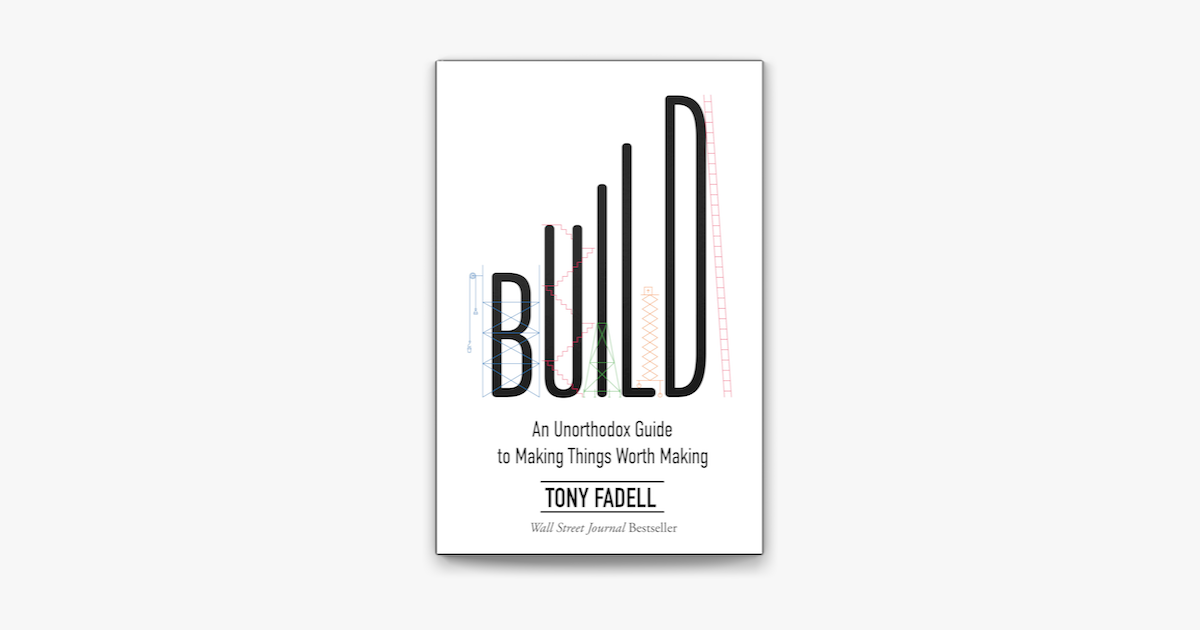
The series has been heavy on theory and strategy. Circularity depends on both, so I hope you understand the emphasis. But Build is a pivot toward execution, and it arrives at the right moment. We have spent a summer with Christensen on why incumbents fail to disrupt themselves, with Martin on how to choose a future before the data exists, and with Ohno on how a discipline outlasts its founder. Fadell exemplifies these and more, and gave us a map to follow.
I'm interested in his perspective because he is arguably our foremost, and most consistent, creator of disruptive products. What makes his record worth studying is less the stature of the products (exalted as they are) than the fact that he did it three times, at three companies, and can explain the method. Circularity transformation is a disruptive prospect that has to please customers even as it moves quickly. It needs a repeatable playbook for making crowd-pleasing, new-to-world products. Build offers one.
The book in brief
Fadell organizes the book along the arc of his career: the noble early failure at General Magic, the journeyman years at Philips, the iPod and iPhone at Apple, and the founding of Nest. The chapters are short and have fun titles ("Assholes," "I Quit," "Heartbeats and Handcuffs"), and each carries a story from his arc.
The through-line is the "General Magic problem," what he calls building the right technology a decade too soon, alleviating a pain point that does not yet exist for most people. I recall General Magic with a fondness that borders on reverence. Yet, I've never actually held, let alone used, its product. That's because Palm beat them with a far less ambitious product that they actually delivered.
That failure is the fuel of Fadell's fire to this day. It is the shared inspiration for almost every imperative presented in the book: find the "why" before the "what"; make the intangible tangible; ship V1 to early adopters, fix it in V2, build the business in V3; and when the landscape is about to shift under you, shift it yourself. Disrupting the iPod with the iPhone is the canonical example of self-disruption, and his telling of that is a canonical reference for Christensen's theory.
 Christian Rishel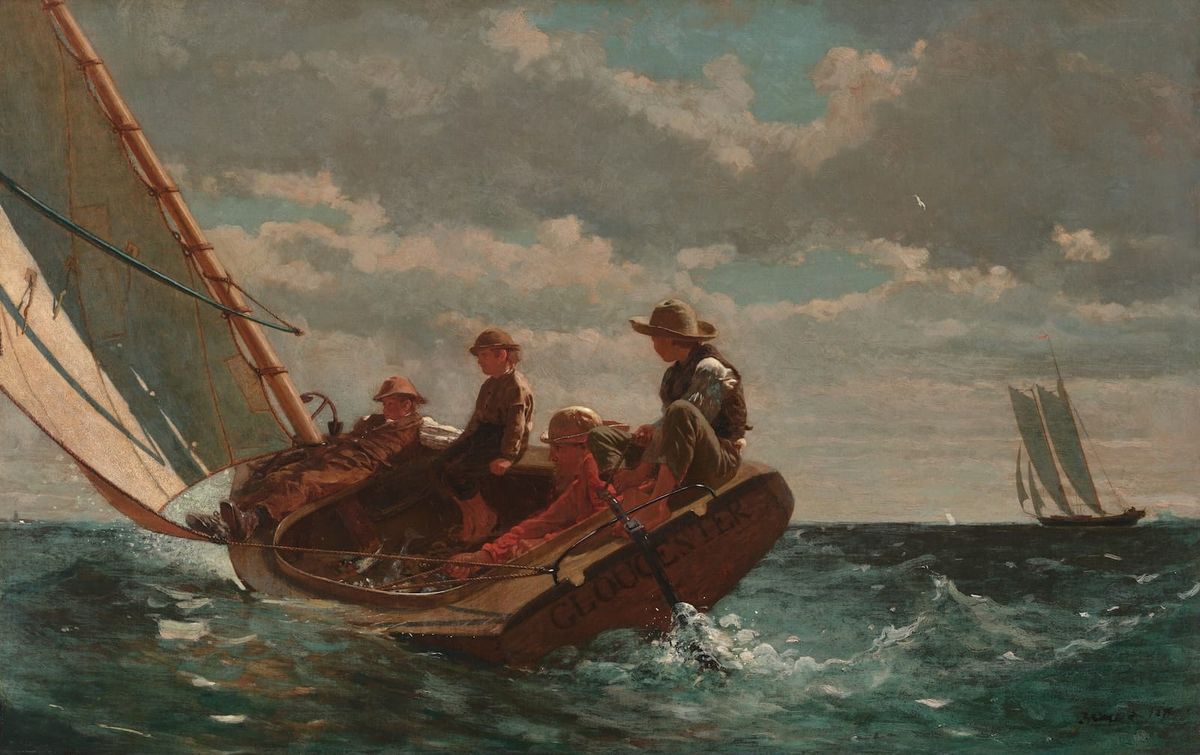
He writes as a practitioner rather than a theorist, but the theory is apparent for anyone who has read Christensen and Martin. Fadell's lived experience is disruption theory with the names filled in.
Shoveling data into the void
Fadell is interested in decisions. He sorts the big ones into two kinds. Data-driven decisions can be studied and defended, and most of the team will agree. Opinion-driven decisions are the ones you make "without the benefit of sufficient data to guide you or back you up." His rule is that a first-generation product is governed by the second kind of decision, whether the team likes it or not. "If a product is really new, there's nothing to compare it to, nothing to optimize, nothing to test." Teams that keep asking for research anyway are, in his phrase, shoveling data into the void. "There was never going to be enough data to make an assured choice."
I accept the distinction and push back on his choice of words. "Opinion" implies caprice, a because-I-said-so. What Fadell is describing is judgment. A lack of data does not mean uninformed. Data is not distributed evenly across every decision space; it clusters where the past has already happened. Disruption means new-to-world, and new-to-world means real feedback lies in the future. There can be no data from the future, which is where our Circular Century currently lives.
What stands in for data is judgment, and Fadell tells us what makes judgment feel assured rather than arbitrary: vision. "Vision provides assurance" is my gloss of his approach, and the sequence holds its magic. For V1, vision first, customer insight second, data third. For V2, once there are paying customers, the order flips. His own example is the iPod's move to Windows, which he and his colleagues had to win against Steve Jobs with revenue numbers. The vision had done its work; it was time to put it third.
Two things make this more than a vocabulary quibble. First, Fadell's version of A/B testing is the cleanest statement of a point I made previously: you can test where the Buy button goes, but "if the basic functionality can flex and change depending on the whims of an A/B test, then there is no core." That is why I've argued that "What would have to be true?" is a better opening question than "How might we?" for disruptive work.
 Christian Rishel
Second, he identifies what makes judgment something other than one person's opinion. The superpower of every great product manager, he says, is empathy. I've called it a strategic capacity. He calls it a job requirement.
 Christian Rishel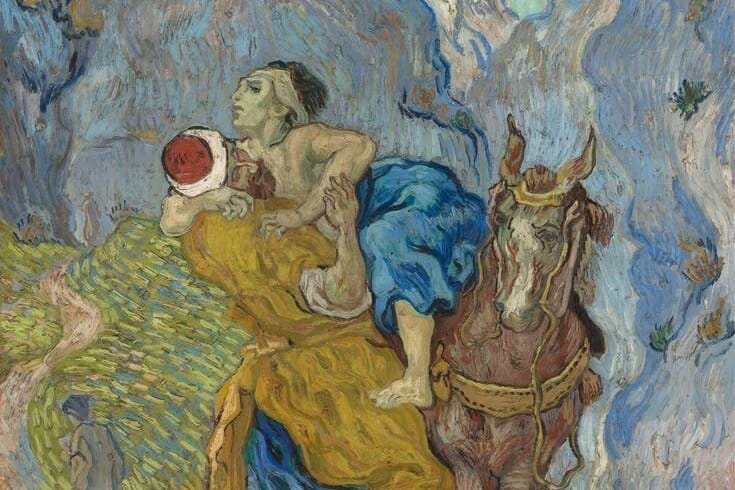
Promethean glimpses
The collection of prototype photos is one of the book's most charming ingredients. The first iPod's was a chunk of styrofoam. The early iPhone prototypes bear little resemblance to what shipped. The Nest box, printed and held and rewritten a year before launch, is where the story of the product was written, because the physical limits of the cardboard package forced the team to decide what a customer should understand first, second, and third.
Fadell credits design thinking by name, and the evidence is on the page: prototyping aligned the team, managed progress, and kept the customer's welfare in the room. I won't second-guess that emphasis. But reading him I kept thinking of something Roger Martin says about prototypes. Although there is no data from the future, you can steal a slice of it and run an experiment. That is what a prototype is: a Promethean glimpse of a possible future, smuggled into the present where it can be handled. Fadell's habit of writing the press release before the product is the same kind of theft with words. If you launched today, could you send it out and have it be mostly true? That's how you know when you're done.
The practice calls to mind Julian Bleecker's design fiction, with its whimsical artifacts from the future made to provoke the imagination. What Fadell adds is discipline: the artifact exists to manage internal stakeholders on a product, to get engineering and marketing and the CEO to see the same thing before it exists. That is worldbuilding at product scale. The question for circularity is what happens when the audience for the prototype is the customer.
The package is hot, the pavilion is cool
Fadell has a rule of compression. It's his ticket to simplicity: ideas must be distilled down in order to fit certain formats and contexts. Packaging is a microcosm of the marketing. A complex feature on the Nest thermostat that took 150 words to explain resolved down to three: Rush Hour Rewards. "You can't say everything everywhere." His messaging architecture, a grid of pains and painkillers and the emotional and rational reasons to buy, exists so that every touchpoint says one true thing. And his customers do not distinguish among those touchpoints: "your advertising and your app and your customer support agents, all of it is your company. Your brand. All of it is one thing." That is a product guy's reformulation of the Lee Clow axiom "everything a brand does is media."
 Christian Rishel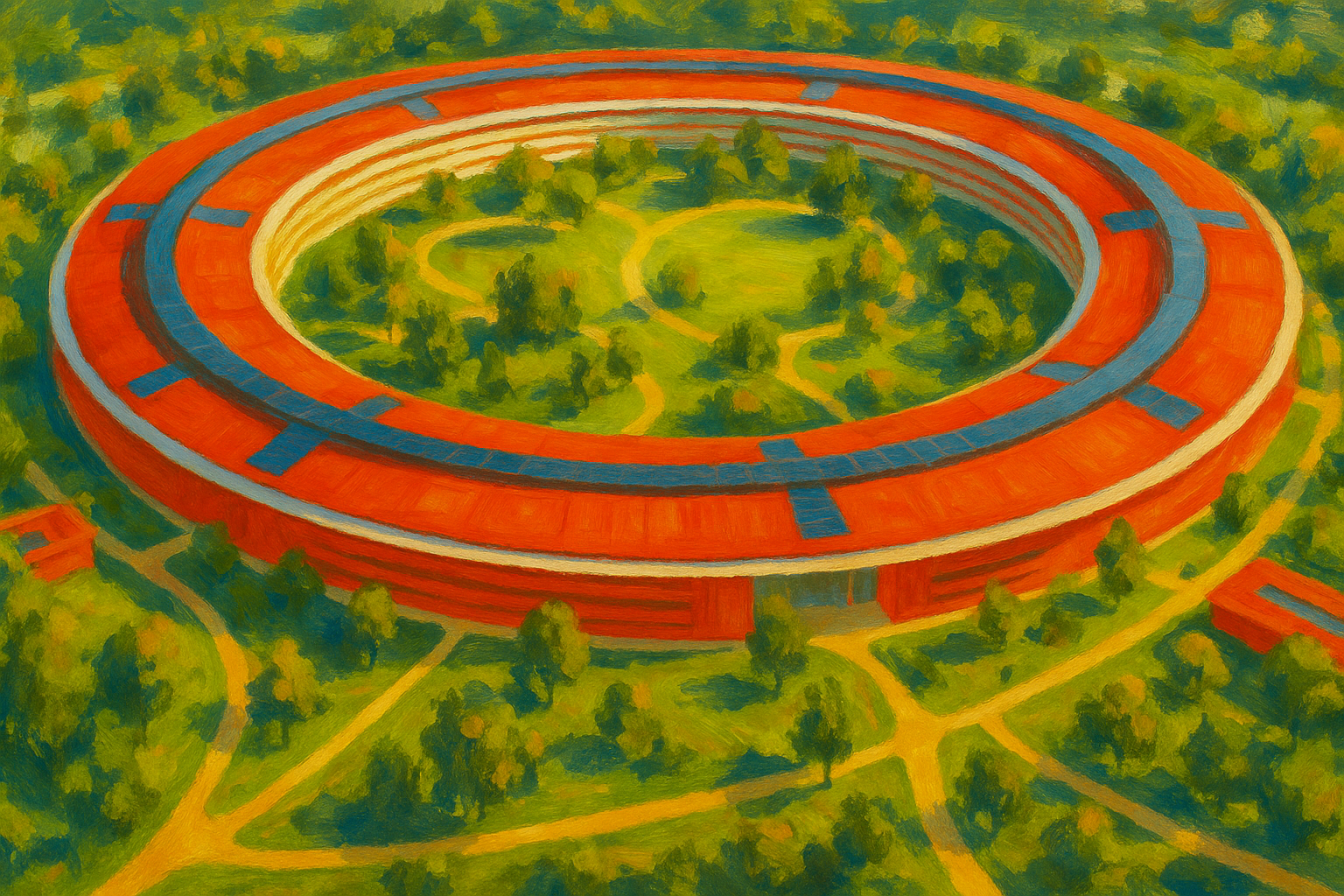
It also connects to Marshall McLuhan, whom we read last week. McLuhan is the reason I think Fadell's compression applies to the message and not to the medium. A package sells what is in it. A press release fits on a page. Both are hot media, filled in for you. Fadell, as much as anyone, helped make the Apple keynote format what it is: a hot medium of unusual power, where the messaging platform and the product heartbeat merge into a singular go to market event, and the story rehearsed daily for months drove the product itself. It works for Apple.
 Christian Rishel
What circularity is selling is different. It is not a single product but a way of living. That calls for a cool medium, the kind the audience participates in. Alex McDowell says the worldbuilder's job is not to imagine the world and show it, but to build a street corner in that world and put the participant on it.
 Christian Rishel
A World's Fair pavilion does that. It promotes a feeling, a multisensory what-if that the visitor walks through at her own pace. Even that needs economy of thought. Nobody remembers what Pepsi's expo pavilion said about Pepsi in 1964. Everyone remembers the song ("It's a Small World"). Nobody remembers General Electric's product claims; everyone who visited them there remembers that there's "A Great Big Beautiful Tomorrow." The refrain is Fadell's compression applied to a feeling: there is goodness in the world, and we're making it better.
The package and the pavilion are both true, and both needed. The package sells the product. The pavilion sells the world the product belongs in.
Four of five
Early in the book Fadell lists the characteristics of a company likely to change the status quo. It is wholly new, or combines existing technology in a way the competition can't make or understand. It solves a real pain that a lot of people feel daily. The technology can deliver on the vision, infrastructure included. Leadership is not dogmatic about what the solution looks like. And it thinks about the problem in a way that's new, but makes sense the moment you hear it.
Readers of this Letter will notice that four of those map onto the domains of Circudynamics without strain. The novel combination is Craft. The daily pain in a large market is Connection. The deliverable technology is Catalysts. And the non-dogmatic leadership is Horizons, in which the strategy assumes the outcome first and serves that. The path is held loosely; empathy steers it in V1 and data in V2. Fadell's word for it is not being dogmatic. Steve Jobs' frame was strong opinions, loosely held.
The domain missing from the list is Living Futures, and I don't think that is an accident. Fadell learned the method at a company that pursues an integrated product strategy, which leaves it structurally uninterested in worlds beyond its ecosystem. Apple could build the best expo pavilions on Earth if it chose to. As it has drawn its strategy, it has no reason to. The fifth characteristic, then, is ours to supply.
The last step
Fadell draws the customer journey as a chain. It begins when someone first hears of your brand and ends, in his words, "when your product disappears from their life, returned or thrown away, sold to a friend or deleted in a burst of electrons." Every step in between is a place the customer can stumble, and his most useful advice is to prototype all of it, the box and the install and the support call, with the care you lavish on the device. The Nest screwdriver, a dollar-fifty tool in every box that the accountants wanted cut, is the emblem: it was a marketing expense and a support expense wearing a COGS line item's clothes, and it made the install a buttery, warm, joyful experience.
His chain stops one step short, and I mean it as a tribute to extend his logic to the final possible step. Where he writes "returned or thrown away," a circular business writes the Last Moment of Truth: the moment a product's first life ends and something has to happen next. In a linear journey that moment is terminal. In a circular one it is a handoff, and it is where the next customer's journey begins, on the resale listing, at the atelier counter, in the refill. Where the linear funnel has one entrance, the loop has many. Fadell already knows the post-sale journey matters; he just draws it as retention. Close the loop and the same prototyping discipline he applies to the box applies to the return.
But Fadell is clear about one thing. Nobody buys the method. Nobody buys the Toyota Production System, but it is the secret sauce that makes possible products like the original Lexus LS400. Superior to and less costly than the Mercedes it sought to displace, the first Lexus made its customers feel happy and smart for choosing it.
And nobody will buy circularity. They will buy the "painkilling" solution a circular business makes possible, or does better than its linear counterpart. Fadell's test for that is unforgiving: does it solve a pain people feel this week, or is it a vitamin? I don't yet know which product will be the Lexus of the Circular Century. That feeling the LS400 gave its customers points us in a number of directions. I took a few guesses in the Carousel of Plenty. What I conjecture is that when it does arrive, it will have been built the way Fadell builds in Build, with one more step — LMOT — at the end.
The bench is reserved for Dynamo members, the people building plenty with us. If you're reading as a guest, you're welcome here. The rest of the build is below. Join the Dynamos!