Understanding Media
Marshall McLuhan is as pertinent today as he was in 1964, and the reason is his definition of media, which is broader than ours. Circularity transformation needs a media strategy in his sense of the word. Here is what he meant.

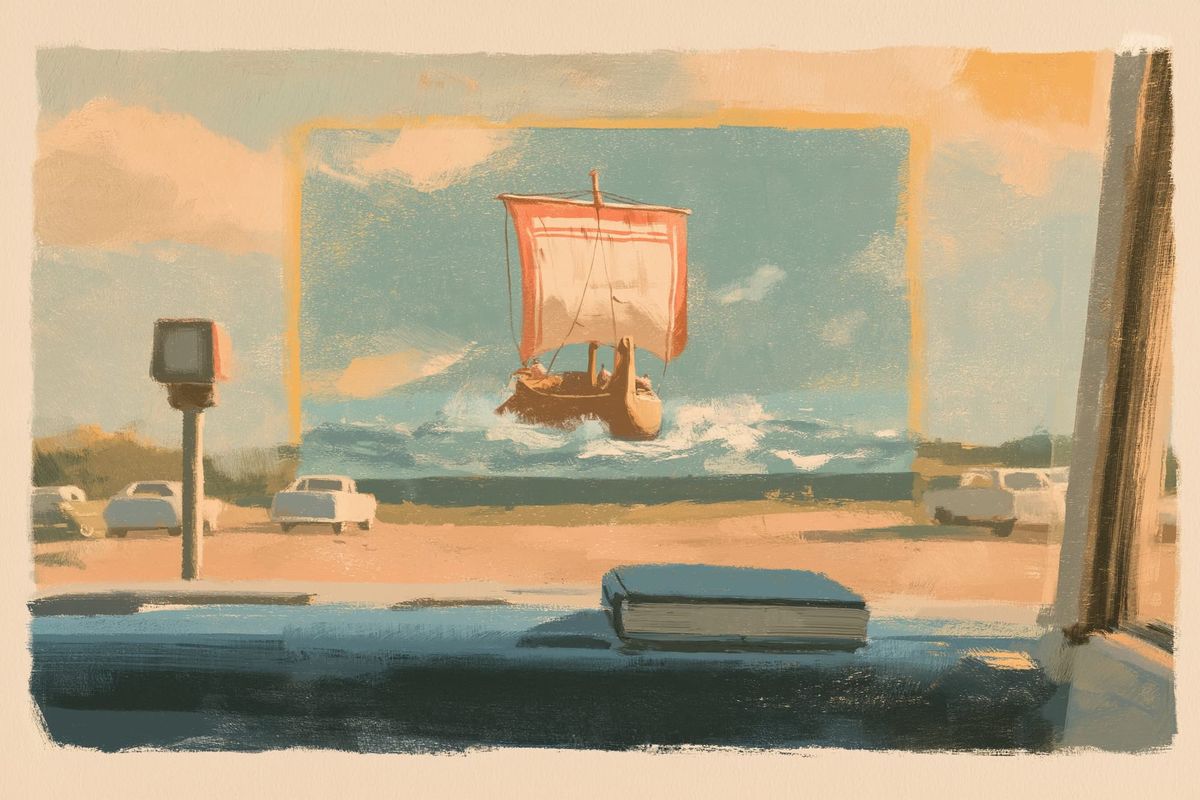
One of my foundational beliefs in starting Circudyne was: circularity needs more Cannes than Davos. More creativity than policy. Imagining more things people want than mandating stuff they're told they need. To support this claim, this week I'm covering Understanding Media: The Extensions of Man by Marshall McLuhan.
 Marshall McLuhan (Author) Format: Kindle Edition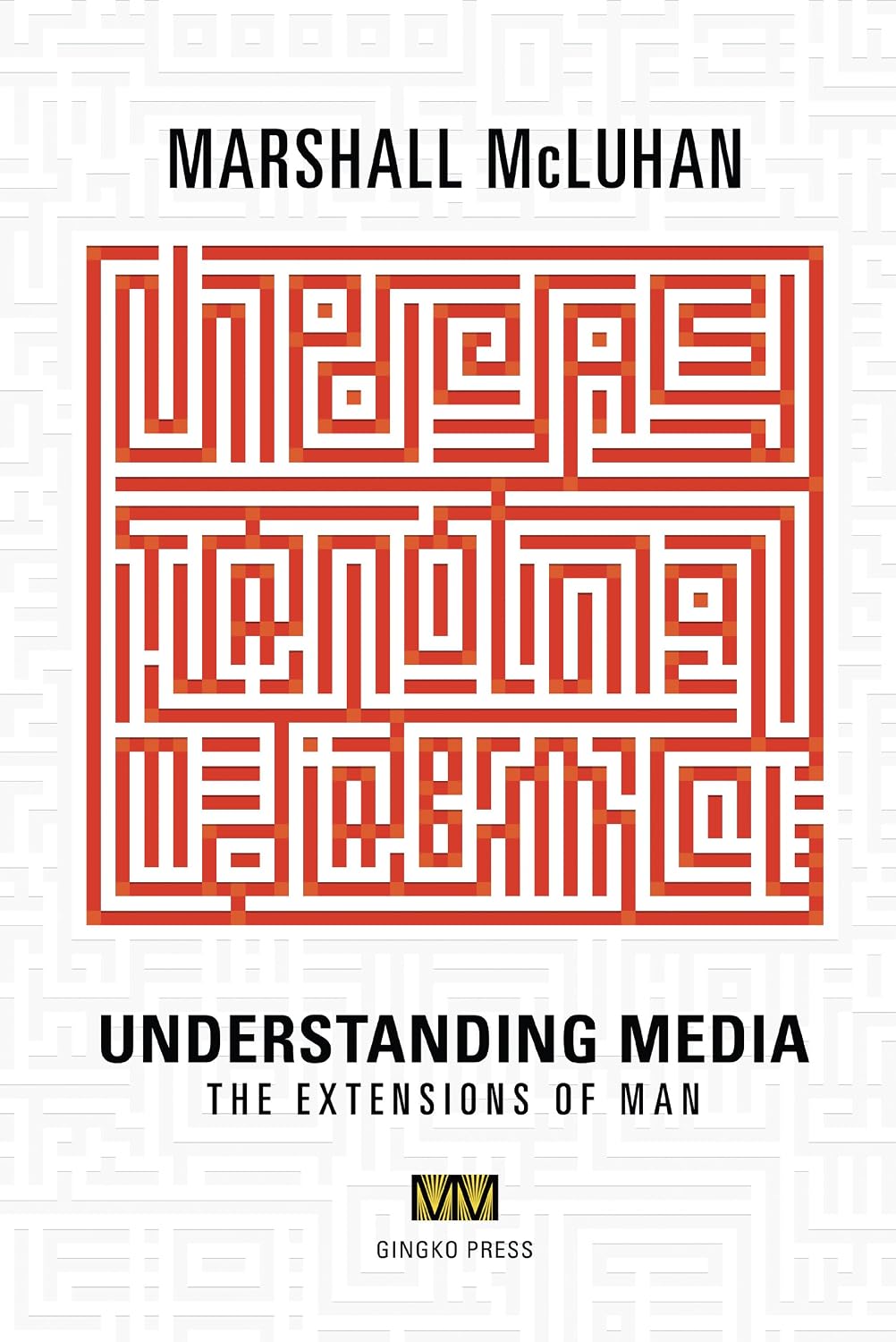
The book has thirty-three chapters. The last thirty-one are case studies, taken one medium at a time. The first two chapters are the theory, and the theory is where I'll focus.
The book in brief
McLuhan was a Canadian professor of English who, in the early 1960s, became one of the most famous public intellectuals in the world. He has a fantastic cameo in Annie Hall.
He is remembered for the phrase, "the medium is the message." The argument behind the catch phrase is what survives scrutiny sixty years on.
The argument goes like this. A medium is any extension of ourselves (hence the subtitle The Extensions of Man). The wheel extends the foot. Clothing extends the skin. Writing extends the eye and money extends the hand. Electricity extends the central nervous system. Every one of these prostheses changes the scale, the pace, or the pattern of human affairs, and that change, not whatever the medium happens to carry, is its message. The content of a medium, he says, "is like the juicy piece of meat carried by the burglar to distract the watchdog of the mind."
By that definition, gunpowder is a medium. Napoleon "understood the grammar of gunpowder," and McLuhan means it literally. Money is a medium. The electric light is a medium with no content at all, which is why nobody regards it as one. And a television network is a medium regardless of what it broadcasts, which is where McLuhan picks a fight. General David Sarnoff of RCA had said that the products of science are neither good nor bad in themselves; it's how they're used that counts. McLuhan calls that "the voice of the current somnambulism," and rewrites the sentence with firearms in place of television to show it doesn't work. A technology never simply adds itself to what we already are. It rearranges us.
A word that shrank
We use the word "media" now to mean the content business. McLuhan specifically delineated the two. But we ignore the distinction constantly, because we are drowning in content. Content is king. The extensions of man have multiplied so fast that they demand more content than any previous generation could produce.
But the misnomer has shrunk our understanding. When we say media we mean channels and feeds and the people who fill them. McLuhan meant the prosthesis itself. Everything a brand does is media, Lee Clow said, and the line only works in McLuhan's sense: the packaging, the retail architecture, the product design are all extensions of the brand into the customer's life. Their message is what they do to the scale and pace and pattern of that life, whatever the campaign says.
 Christian Rishel
Once we restore McLuhan's meaning of the word, three things come into focus: AI, mythology, and strategy.
A medium we can only see as a technology
McLuhan closes his introduction with a prediction. After the mechanical age extended our bodies in space and the electric age extended our nervous system around the planet, "we approach the final phase of the extensions of man," which he calls "the technological simulation of consciousness, when the creative process of knowing will be collectively and corporately extended to the whole of human society."
He wrote that in 1964. It is an uncanny one-sentence description of artificial intelligence written as media theory, not computer science.
We talk about AI as a technology and as an economic force. We rarely talk about it as a medium, which is the thing it most obviously is: an extension of thought, which will change the scale, pace, and pattern of everything it touches, regardless of what anyone uses it for. Scale, pace, and pattern are his words. He would probably say that the content — the chatbots and the images and the code — is the meat for the watchdog.
For our purposes, AI is a component of the Three Dynamos, the enabling technologies that converge to make the Circular Century possible: Ambient Intelligence, Distributed Power, and Recombinant Matter. Reading McLuhan encourages me to think about all three as media. Each is a prosthesis. Each will rearrange us. The question is what discipline arrays them.
We are as gods
Four years after McLuhan wrote Understanding Media, Stewart Brand opened the Whole Earth Catalog with "We are as gods and might as well get good at it." I think these are related ideas.
The extensions of man confer powers that every earlier civilization reserved for the gods. That is why the oldest stories we have are about mortals mingling with gods, borrowing their powers, cheating them, paying for it, and coming home. Stephen Fry, introducing his Odyssey, notes that the Trojan War was "a mortal enterprise," suffered and endured by ordinary people with the gods intruding at the edges, and that the Odyssey begins where the war ends: a profoundly human story with gods and monsters playing their part.
That blending of the earthly and the heavenly is what ancient and modern audiences alike want from myth. It's clear why. A myth is a case study in successful passage from one world to another. We did it before; we can do it again. That is the regenerative power George Lucas reached for when he decided, after making two angry films, that pessimism only makes people accept the conditions that prevail, and that what the country needed was to "regenerate optimism." He read Campbell, saw what needed doing, and did it, without a commission, as an artist. McLuhan says the serious artist is the only person who can encounter new technology with impunity, because the artist is the expert in changes of sense perception. In McLuhan's sense, Lucas is a serious artist.
Douglas Holt has shown that brands become icons by siding with a cultural longing and giving it a voice; I've called the distance between how people live and how they want to live the Mythology Gap. Holt's diagnosis and Lucas' prescription are possible because of McLuhan's diagnosis. The media people are reaching for right now, like an Odyssey in theaters, are the tribal, oral, participatory forms that predate Plato. People are not looking for better arguments. They are looking for a formative myth to carry them from this world to the next. The brands that supply one will extend themselves into the future as icons.
 Christian Rishel
What McLuhan means by a media strategy
Every brand is doing media already, in the full sense. The strategy question is whether it is doing it on purpose.
McLuhan's metaphor for that question is temperature. A hot medium is high definition, filled in for you, and asks little: print, radio, film, the lecture. A cool medium is low definition and has to be completed by its audience: the telephone, the seminar, the cartoon, the television of his day. Hot media are low in participation. Cool media are high in participation. He also observed that the mechanical age was fragmentary and centralist while the electric age is "integral and decentralist in depth," and that the electric acceleration, unlike every specialist technology before it, retribalizes.
Put those together and a pattern appears that fits the Circular Century almost too well. Decentralized is cool is participatory is tribal. A power plant five states away is hot; the solar panel you own is cool. A fast food drive-through is hot; the neighborhood kitchen is cool. A subscription that enshittifies on schedule is hot; the repairable durable good you maintain is cool, and the community it engenders looks a lot like a tribe forming around order. Clayton Christensen would recognize the same pattern as disruption from the low end, closer to the user, good enough, and growing.
This is why circularity transformation needs a media strategy. The Three Dynamos make the tribe materially possible. What the tribe lacks is the formative myth to rally around. That myth has to arrive first, as perception, before the demand is measurable. I argued several seasons ago that the funnel starts earlier than awareness, and that if we want different outcomes we have to intervene earlier, at the level of experience. McLuhan explains why. "Everybody experiences far more than he understands. Yet it is experience, rather than understanding, that influences behavior, especially in collective matters of media and technology, where the individual is almost inevitably unaware of their effect upon him."
Most brands today receive perception. They measure the demand that already exists because it can be sized, and they arrive too late in the funnel to affect anything. The alternative is to shape it, which means participating in the myth rather than responding to it. Disney understood this when he built on fairy tales. Apple understood it when it planted itself at the crossroads of technology and the liberal arts. Everything a brand does is media.
Discipline, not destination
Circudyne promotes "a world without waste," and it would be easy to mistake that for the goal. It isn't. Elimination of waste was never Toyota's purpose either. Taiichi Ohno's book is explicit that higher imperatives came from the Toyoda family: raise the originality and consciousness of Japanese industry, catch up with America in three years, develop human ability to its fullest capacity. Waste elimination was the organizing principle that arrayed the tools toward those ends. Circularity plays the same role. It is the discipline by which we point the prostheses at goals worth having, and the goal at the top of the list, as I've argued before, is joy, which among other things offers a gracious exit from the hedonic treadmill.
McLuhan would ask whether any discipline can hold a medium to a purpose, since media rearrange us while we use them. I don't have a theory of progress to offer against that. I have the observation that Toyota is still muda-free decades after Ohno, that Disney and Apple still embody their founders' values imperfectly enough that people keep asking what Walt or Steve would do, and that progress has never been a steady state anyway.
What we can expect of ourselves is the initiative to start the project in earnest. We'll be lucky to have McLuhan's problem one day. It will mean the transformation is under way.
McLuhan would say the rest of this letter is a cool medium: it needs you to complete it. Dynamo members, the people building plenty with us, read on. If you're reading as a guest, you're welcome here. But the best seats are reserved. Join the Dynamos.