The Logic of Scientific Revolutions
Two esteemed points of view on the nature of progress, how it applies to strategy, and what it means for circularity transformation.


When compiling this list of summer reading, I knew it had to include two books that Roger Martin calls “required reading if you want to be a great strategist”: Karl Popper's The Logic of Scientific Discovery (1959) and Thomas Kuhn's The Structure of Scientific Revolutions (1962). I read Popper in college. Kuhn was new to me.
 Karl Popper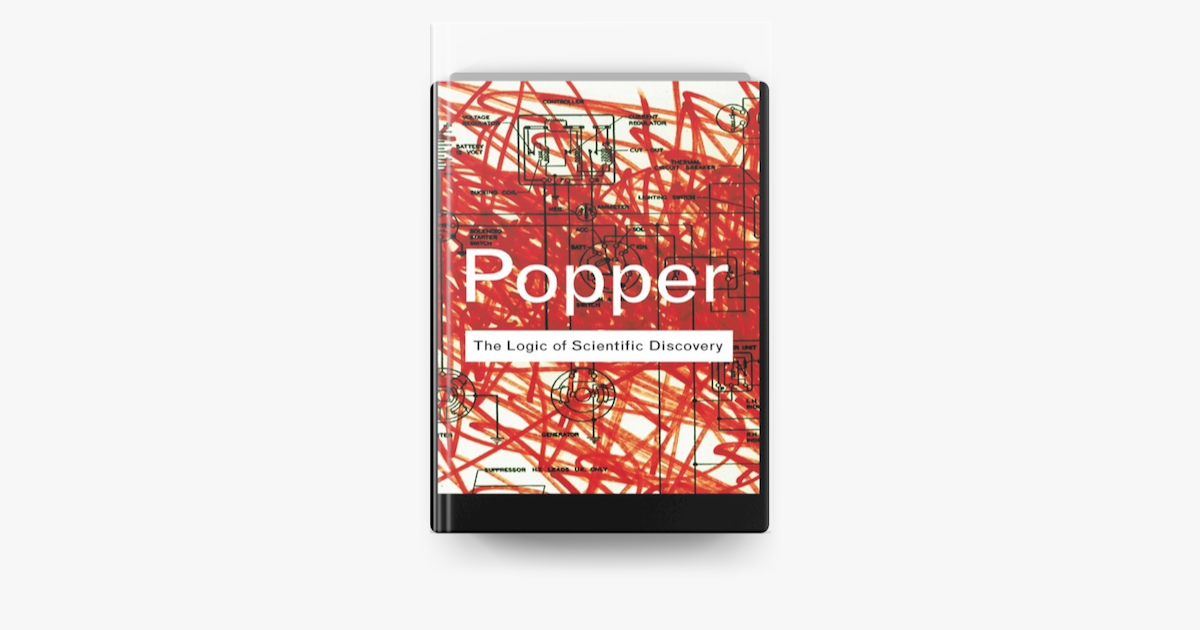
 Thomas S. Kuhn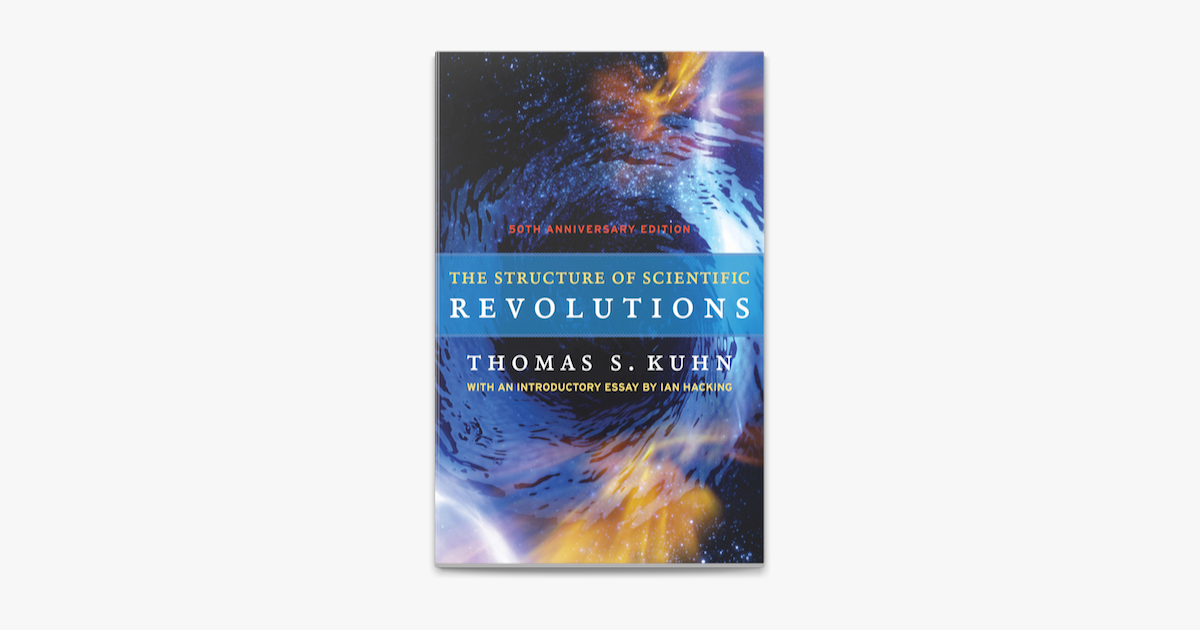
I have made no secret of my debt to Martin’s leadership and ideas. That he considered these books compulsory reading was good enough for me. But the genius was in pairing the two. The books are important, but the dialectic between them is essential.
Martin is a philosopher's strategist, or a strategist's philosopher; that is why I have found him good company on my particular journey. He flies at the right altitude for the question that nags our enterprise: why the Circular Century we can already imagine is taking so long to get here. The debate between Popper and Kuhn, literal and figurative, provides philosophical and historical perspective.
A dialectic on the nature of progress
Popper was a philosopher, and his objective was finding truth. You can think of his book as a defense — and radicalization — of the principle underlying Sherlock Holmes’ famous line about deduction: that when you eliminate the impossible, whatever remains, however improbable, is the truth. Except for Popper, the process of elimination never ends. He established an exclusive definition of science, embodying a strict standard of testability. No number of confirming observations can prove something is true. No number of white swans establishes the claim that all swans are white, while a single black swan refutes it. Proof of fact being off the table, what science can do is falsify the unfactual. A theory becomes scientific only by sticking its neck out, and the scientist's job is to expose the best available theory to what Popper called the fiercest struggle for survival. It never ends. Whoever decides that a statement is settled and needs no further test, he wrote, needs to retire from the game.
Kuhn was a historian, and his objective was solving problems. Science is organized around paradigms, inside the boundaries of which the role of the scientist is to “solve puzzles.” Paradigms contain worlds, comprised of four kinds of commitments: conceptual, theoretical, instrumental, and methodological. It’s a profoundly inductive approach. He emphasized the role that textbooks play in establishing a paradigm’s governing narrative. Most science is what he called "normal science" — refining the paradigm, and pruning observations that won’t fit. The misfits that survive this pruning process accumulate as anomalies. A small number of anomalies are tolerated as exceptions that prove the rule. A large number of anomalies breeds crisis. After that, rarely, a revolution: a rival paradigm that explains the old anomalies, and a community that converts to it. The function that tips the conversion to a new paradigm is a social choice, not a logical one. Persuasion plays its part.
The account of their debate at a colloquium in London in 1965 covers this dynamic of paradigm shift. Popper thought normal science was science's failure mode — puzzle-solvers trained out of the critical attitude. Kuhn thought falsification described an ideal of science that has never prevailed; if every misfit killed a theory, all theories would die at birth.
That was when I realized Martin slipped something sneaky into his prescription for reading these two books. Once I perceived Popper and Kuhn’s quarrel, I expected to have to choose a side. But what I left with was a cleaner way to understand the space between. Both men believed in solving problems. They disagreed about what the solving answers to. Popper's scientist answers to reality: solve the problem to get nearer to the truth. Kuhn's answers to the community: solve the puzzle to extend the paradigm, and when the paradigm fails, win the revolution by conversion — because proof alone is not sufficient for change.
Truth on one side. Working agreement on the other. The two sides of progress.
A movement before its paradigm
Kuhn offers a diagnostic for telling where a discipline stands. Before its paradigm arrives, he says, you find deep and recurring debates over legitimate methods, problems, and standards of solution — debates that define schools rather than produce agreement. If you have spent time in the circular economy literature, you may feel a shock of recognition. Metrics that disagree, frameworks that multiply, subscale experiments that peter out when the community loses interest.
Kuhn would regard this disarray sympathetically: as the signature of a discipline whose paradigm has not yet been founded. What is missing is the founding achievement itself — the demonstration unprecedented enough to pull adherents away from competing approaches and open-ended enough to hand them a generation of work. I have written before that circularity is Lean 2.0, but the circular Toyota has not yet emerged. Kuhn gives us the reason why that absence matters so much. Until the exemplar exists, there is nothing to inspire conversion.
The double stall
Meanwhile the incumbent paradigm behaves exactly as Kuhn says paradigms behave. The linear economy's anomalies are hardly hidden — the say-do gap between what people profess to want and what the market gives them to buy, the externalities that squirrel costs under somebody else's carpet, the resource scarcity choices that evade ratification. Each is perceived as an exception, a cost of doing business, a problem for a later quarter. Popper saw this kind of maneuver for what it was: whenever the classical system of the day is threatened, the system will appear unshaken to the "conventionalist," who explains the inconsistencies away.
A paradigm that does not yet exist cannot be verified into existence
The challengers make the opposite error. We keep trying to win by verification — searching for the settled proof, the definitive case study, a metric that ends the argument. But there is no data from the future. A paradigm that does not yet exist cannot be verified into existence, and Kuhn is blunt about why: paradigm debates concern which candidate should guide work on problems neither side can yet claim to solve. Demanding proof before commitment gets the logic exactly backwards.
So the transition stalls twice over. An old paradigm defends itself the way paradigms always do, and a successor has not yet learned that it cannot win by proof. As Gramsci put it, the old is dying and the new cannot be born.
The choice between Popper and Kuhn looks, on its face, like a dilemma. But it behaves like a set of instructions. Like a certain binary I wrote about in June, it disallows indifference — and whichever side you choose, the work turns out to be the same. Posit your theory honestly. Hunt the anomalies. Build the thing a community can convert to.
That is the position Martin stakes out between the two philosophers, and it is why he recommends strategists read both books. One's strategy, he writes, is in essence a paradigm — a theory of winning, never the truth, only the best construction available at the moment. You hold it with a Popperian conscience: watch for the anomalies, and keep asking what would have to be true for a theory that makes them expected. And you advance it by Kuhnian means, because markets, boards, and organizations are communities, and communities are converted rather than compelled.
Circudyne's project is to carry that lesson one step past strategy — to point it at circularity transformation, where the paradigm waiting to be founded is larger than any one firm. A vision of a better future and a theory of success are the chicken and the egg.
Golden ages are chosen
Carlota Perez mapped how technological ages turn over: each great surge installs its technologies first, and only afterward — sometimes long afterward — opens into the broad prosperity she calls a golden age. The turn is conditional. The installed technologies can become a golden age if we aim them at something worth having. I wrote about her pattern in June, and the line I keep returning to is the one that assigns us the work: golden ages are chosen, not delivered. The infrastructure points the way. It does not walk the road.
Popper and Kuhn, read together, explain why our time for choosing is past due. The choice is a paradigm shift. And a paradigm shift requires exactly that pairing: a vision compelling enough that a community converts to it, and a theory of success honest enough to keep the new paradigm from settling into the next dogma. A Kuhnian act, performed with a Popperian conscience. That is why this moment calls for philosophy and strategy at once — and why, midway through a summer of reading, a report on two philosophers of science belongs in a story about economic and cultural transformation.
There is a pair of first principles to consider. Science reconciles us to what is true. Strategy commits us to what we choose. The Circular Century will be founded by people who can do both at once.
The rest of this letter is for Dynamo members — the people building plenty with us. If you're reading as a guest, you're welcome here. But the best seats are reserved. Join the Dynamos.