Vendor Dependency and the Loveless Long-Term Relationship
In a performance economy, the product is a vessel. The software is the spirit. What happens when the spirit departs?

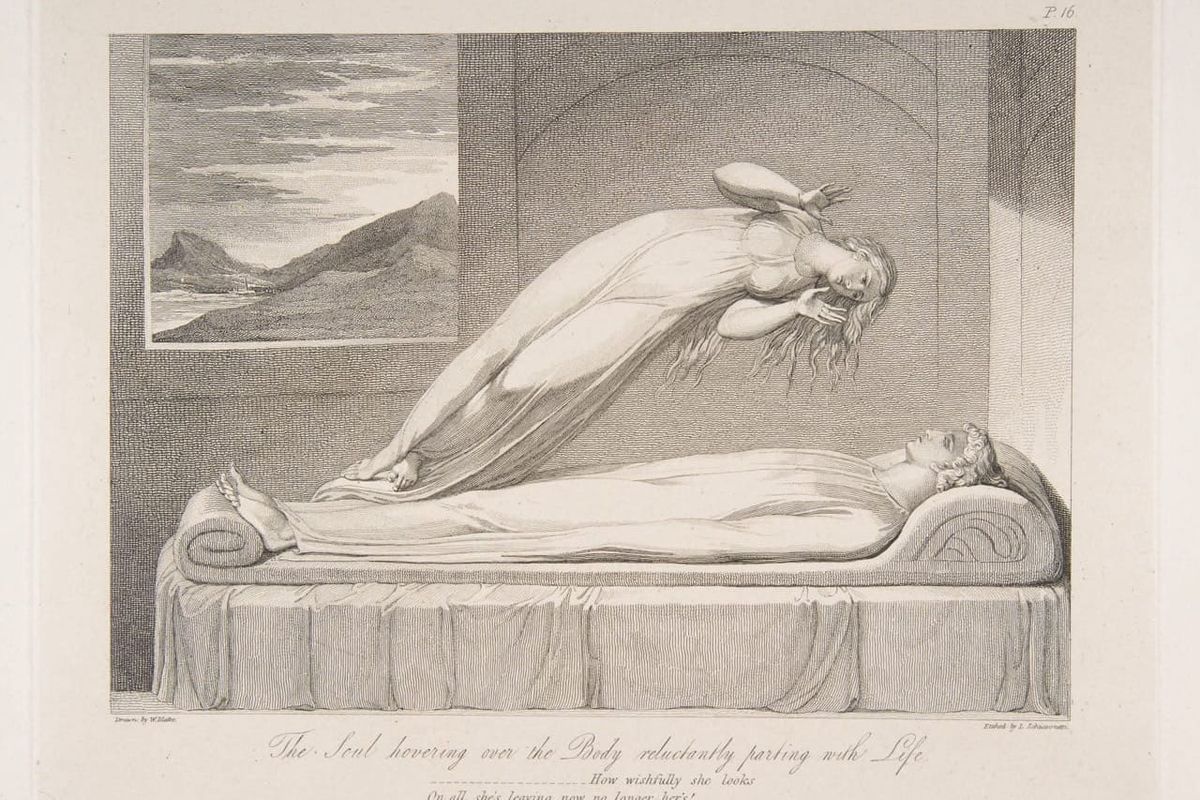
The circular economy asks companies to build goods that last. But a durable good in the performance economy is a software-defined good, and a software-defined good lives only as long as its maker keeps the lights on.
What happens when the maker walks away?
The spirit departs
On January 31st of this year, Belkin shut down its Wemo cloud services. Overnight, millions of smart home devices lost the features that made them worth buying. Remote access, voice assistant integrations, app control: gone. Devices sold as recently as 2023 became, in the language of the industry, "bricked."
Belkin isn't bankrupt. It simply decided that Wemo was no longer worth maintaining. After years of declining investment and ceasing new product development, the company reallocated resources elsewhere in its portfolio, and its customers absorbed the cost.
The Fisker Ocean tells a darker version of the same story. When Fisker filed for bankruptcy in June 2024, roughly 7,500 owners of a $70,000 software-defined electric vehicle found themselves orphaned. No factory support. No software updates. No warranty. No one to pick up the phone.
What followed was a year-long scramble. A company called American Lease bought the remaining Fisker inventory and struck a deal to maintain cloud services, only to discover the vehicle data couldn't be ported to new servers. A second deal was negotiated for $2.5 million. Fisker owners formed their own nonprofit association. Then American Lease and the owners' association fell into a billing dispute, and the services were cut off again. A subsequent software update bricked ten percent of the cars it was supposed to fix.
As of now, Fisker Ocean owners can still drive their cars and charge them. But the connected features that justified the premium and constituted the product's ongoing relationship with its maker are gone. The vehicle remains. The spirit has departed.
The covenant problem
These are structural vulnerabilities of how software-defined products work.
The performance economy, introduced by Swiss economist Walter Stahel, holds that the value of products should be captured through their performance, not their ownership. Sell use, not objects. Retain ownership. Internalize maintenance. This realignment of incentives is the circular economy's most powerful structural idea: it makes the producer responsible for the full life of the good, which means less wasteful production, longer product lives, and closed material loops. In B2B markets, the logic is already mainstream. For consumer products, adoption is slower and harder, because consumers take comfort from ownership and resist the subscription models that performance economics tend to produce. But the direction is clear. The performance economy is how circularity scales. Which makes its central vulnerability all the more urgent to resolve.
In the performance economy, the product is a vessel. The software, the data relationship, the ongoing service are the animating spirit. When the vendor disappears or simply loses interest, you are left with an expensive, inert object. A car that can't update. A switch that can't be controlled. A thing that has become a burden.
Joy, which we've explored in this letter as the secret ingredient of the circular century, is what you get when a durable good is also a loved good: when the relationship between user and object, and between consumer and producer, is warm, intentional, and aligned. Vendor dependency is the dark mirror of that joy. It is what happens when a product promises a relationship and then breaks the promise through bankruptcy, acquisition, strategic pivot, or neglect.
The customer is left in a long-term relationship with something that has stopped caring.
The performance economy asks us to trust that the relationship will last at least as long as the product. This is a covenant. And right now, almost nobody is designing for it.
Two kinds of failure
The Belkin and Fisker cases represent different failure modes, and the distinction matters for anyone designing circular solutions.
Fisker is a capital failure. A startup that burned through its funding before it could sustain the ecosystem its product required. The VC model that funded it was optimized for rapid growth and exit, not for the multi-decade support obligations that come with selling a car. When the capital ran out, so did the covenant.
This is particularly sobering for companies like Impulse Labs, whose battery-equipped, software-defined induction cooktop depends on ongoing first-party support to deliver its most differentiating features. Impulse is building something remarkable: a consumer appliance that doubles as permissionless energy infrastructure. But the brilliance of the product deepens the covenant it implies. Customers are buying more than a cooktop; they're subscribing to a vision of distributed energy that requires the company to be around, updating firmware, maintaining integrations, honoring the promise embedded in the object.
The Belkin case is a commitment failure. An established company with ample resources that chose to walk away from a product line because maintaining it was no longer a strategic priority. No one went bankrupt. The resources existed. The will didn't.
This is, if anything, the more troubling pattern. Startups flame out, and we accept that, however painfully. But when an incumbent with a billion-dollar parent company decides that the cloud services underlying your light switches aren't worth the server costs, you confront a different kind of betrayal. The product didn't fail. The promise did.
Durability is a joint function
The durability of a performance economy good is not a property of the object alone. It is a joint function of two things: the physical durability of the good (how long it can keep performing its core function) and the durability of the relationship (how long the vendor can and will sustain the animating software, service, and care).
Joy requires both. A loveless long-term relationship, whether with a partner, an institution, or a product, is not neutral. It is a tax. Time, attention, and money spent on something that neither delights nor serves, but which you cannot easily leave.
This is what makes vendor dependency a circularity problem, not merely a consumer protection problem. The entire premise of circular design is extending the useful life of goods. But if the useful life of a software-defined good is bounded by the vendor's attention span rather than the product's physical durability, we haven't solved the problem. We've moved it.
It's the latest form of planned obsolescence. The product doesn't break. The promise does.
The mythology of staying
Douglas Holt's research on cultural branding reveals something important about the companies that earn lasting loyalty. In what Holt calls "myth markets," brands don't compete on features or price. They compete on their ability to resolve a tension people feel between how they live and how they aspire to live. The brands that win these markets become icons, and they do so by speaking with what Holt describes as a "rebel's voice," drawing on the credibility of people who actually live according to alternative ideals rather than merely borrowing their trappings.
What makes a rebel voice credible? Holt is clear: it requires an intimate and authentic relationship with the world the brand claims to represent. You cannot mimic the language and expect to be believed. You have to inhabit the commitment.
In the circular economy, the mythology gap is vast. People want regeneration over extraction, abundance over scarcity, connection over isolation. As Hugo Warner and I have written, nearly a third of the consumer market is waiting to buy from companies that demonstrate genuine commitment to sustainability, held back not by indifference but by uncertainty about whether the commitment is real. Hugo and I identified them as "conscious non-consumers": a dormant segment whose activation may represent the single greatest lever for consumer-facing business growth.
Unlocking these consumers requires what Holt would recognize as cultural leadership. Not green claims on packaging or Panglossian sustainability reports. A brand that leads culture, as Holt argues, creates "charismatic visions of the world to make sense of confusing societal changes." The rebel act in the circular economy is not adding a recycling program to an otherwise linear business. The rebel act is staying. Committing to the product's full life. Keeping the software alive. Honoring the covenant when it would be cheaper, quarter by quarter, to let it lapse.
When a company makes that commitment legible, it reads as identity. Conscious non-consumers don't need more data about carbon offsets. They need to see a company that, by its behavior, resolves the tension between how they live (surrounded by disposable, unsupported products) and how they want to live (in relationship with things that last and makers who care).
That is how first-movers in longevity commitments earn brand equity. The mythology of staying accumulates over time, the way trust accumulates in any real relationship. The company that can point to a decade of honoring its covenant possesses cultural authority that no marketing campaign can manufacture after the fact. Leadership, in this sense, includes knowing when and how to stay, and making succession clear when circumstances require transition.
Designing for the covenant
The answer cannot be "no more software-defined products." Software definition is how modern performance economy goods deliver ongoing value, adapt to users, and improve over time. The problem is the absence of structural assurances that the relationship will be honored.
For the performance economy to earn its promise, it must assure the relationship. That means:
Longevity commitments. Service lives that match product lives. If you sell a cooktop built to last twenty years, your firmware commitment should be legible in those same terms. The EU's emerging right-to-repair frameworks signal where regulation is heading, but the brands that get ahead of regulation, and stay ahead of it, will earn trust that compliance alone cannot.
Graceful degradation. If the cloud goes away, the product should still work at its core function. Some Belkin Wemo devices survived the shutdown because they operated locally through Thread, the mesh networking standard, and continued performing basic switching and sensing tasks. But survival through a third-party protocol is different from a graceful exit by the maker. A genuine commitment would have looked like a final firmware upgrade to Matter, the broader interoperability standard built on Thread, giving every Wemo device a home in the wider smart home ecosystem before the lights went out.
Succession architecture. Open firmware. Escrow agreements. Interoperability standards. Structural provisions that allow a community, a successor company, or the customer to sustain the product if the original maker cannot. The Fisker Owners Association is building this retroactively, at great cost and pain. It should have been designed in from the start.
Transparent intent. Being clear about what happens if circumstances change. Not buried in terms of service, but communicated as a feature of the brand relationship.
The customer will know
Walt Disney and his Imagineering lead John Hench shared a conviction about what they called "the architecture of reassurance": the idea that designed environments communicate care through coherence, and that every detail, even ones the visitor never consciously notices, contributes to whether the experience feels trustworthy. Hench once questioned whether Disney had gone too far with the leather-strap suspension on Main Street's stagecoaches, an authentic period detail that no guest would consciously identify. "People aren't going to get this," he told Walt. "It is too much perfection." Disney's answer was immediate: "Yes, they will. They will feel good about it. And they will understand that it's all done for them."
Steve Jobs learned a version of the same principle from his father, Paul, while building a fence around the family home in Mountain View. Paul insisted that the back of the fence be finished with the same care as the front. When young Steve asked why, since nobody would ever see it, Paul's answer was plain: you will know. Jobs carried that conviction through his entire career. He insisted that the circuit boards inside a Macintosh be beautiful, that the unseen interior of the machine reflect the same standard as the screen the user touched.
These two stories converge on a single insight. Walt's stagecoach suspension and Steve's fence both say: the care you invest in the parts the customer cannot see is the care the customer can feel.
This is the deepest argument for the vendor covenant. Establishing the commitment to keep the spirit alive for the duration of a product's physical life is the back-office equivalent of finishing the back of the fence. It is the operational infrastructure that customers will never see: the capital structure decisions, the firmware maintenance budgets, the succession provisions. And the customer will know.
Not because they audit your server uptime. Because they feel good about the purchase, or they don't. Because they trust you, or they don't. Because something in the product's bearing, in the company's posture, communicates whether the relationship is built to last.
Rivian is an interesting case here. The company has topped Consumer Reports' owner satisfaction survey for three consecutive years, with 86% of owners saying they would buy from the brand again, even as Rivian ranks near the bottom for predicted reliability and continues to operate at a significant loss. By any conventional analysis, this loyalty is irrational. The vehicles have problems. The company hasn't turned a profit. The service network can't keep pace with demand.
And yet. Owners report feeling something. A sense that Rivian is in it for the long run. That the people making the vehicle care about the relationship with the people driving it. The VW joint venture, the expanding Adventure Network, the over-the-air updates that keep arriving: Rivian cares about the back of the fence. Their structural decisions communicate covenant without saying the word.
How do I know Rivian has this right? I don't. Nobody can be certain about the long-term durability of any company's commitment. But as Walt explained to Hench: I feel good about it.
And that feeling, far more than any spec sheet or warranty card, is what the performance economy must learn to earn.