Sparking Joy: The Secret Ingredient of the Circular Century
Marie Kondo taught us how to part with what doesn’t spark joy. Circularity challenges us to build a world where everything does. What if joy isn’t just an outcome — but the compass for transformation itself?

This is the fifth installment of The Circudyne Odyssey: an exploration of formative influences. Last week, we covered Self-Disruption Theory. Next week: The Overview Effect.
The right book at the right time can set the conditions for what you're able to see next.
The serendipitous source that prepared me to receive the principles and possibilities of circularity was Marie Kondo's The Life-Changing Magic of Tidying Up.
I don't remember why I picked it up—I had no particular organization problem to solve. But something about its presentation at the bookstore suggested it contained more than practical advice.
That instinct proved correct. For Kondo, tidying contains elements of the sacred. Her method calls for self-knowledge rooted in Japanese animism. I was astonished when I reached this passage:
"Everything you own wants to be of use to you. Even if you throw it away or burn it, it will only leave behind the energy of wanting to be of service. Freed from its physical form, it will move about your world as energy, letting other things know that you are a special person, and come back to you as the thing that will be of most use to who you are now, the thing that will bring you the most happiness."
Looking beyond its ancient cosmology, this idea strikes me as having moral consequence. It provides a path toward affording respect for all things, living or otherwise. One practical benefit of which is the possibility of righting our relationship with stuff — a relationship that's profoundly out of balance because humans are still not accustomed to the abundance provided by the industrial age.
When I encountered the formal idea of circular economy shortly after reading her book, Kondo's perspective offered a lens for understanding it as a way of capturing this cosmology and turning it into a better way of living.
Through that lens, I could see circularity taking the energy and matter of modern industrial capacity and rearranging it into something that better suits our reality—in terms of efficiency, yes, but also beauty and joy. It brings dignity to a situation that sorely needs it. It reconciles desire and need into something elegant—replacing the desperate avarice that surrounds (and tempts) us.
Circularity offers a pathway for brands to profitably restore humanity's relationship with things. I don't think that thought would have occurred to me without first having encountered Marie Kondo's unique blend of self-help and ancient religious belief.
Kondo’s insight gave me a compass — joy — as a guide for imagining the Circular Century.
Kondo has a new book out, Letter from Japan. It's proven a treat for me, since the theme is her exploration of Japanese culture and experiences that informed her philosophy. I wanted to dedicate this Circudyne Letter to the subject of one of its chapters: mottainai.
Mottainai is the Japanese concept expressing regret over waste and reverence for what things can still offer. This is the cultural foundation that makes performance economy business models emotionally sustainable.
We've Built This Before
In Letter from Japan, there's a description of a thriving circular economy that already happened: the "Edonomy."
From 1603 to 1868, Edo (now Tokyo) became the world's largest city with over one million residents. With national isolation limiting trade, the city developed what historians call "Edonomy" — an efficient closed-loop system where all waste supported production and previously produced items were repaired and reused.
Kondo describes "a vast number of refurbishing and recycling businesses." When something broke, specialized businesses repaired and reused it until it could no longer serve any purpose. The city operated on the principle of never producing waste that could not be repurposed.
That's an embodiment of Walter Stahel's Performance Economy: service-based business models, repair ecosystems, design for longevity — except powered by constraint-driven mottainai rather than efficiency-driven optimization.
By necessity, it worked. At massive scale.
The Fork in the Road: Three Possible Futures
Edonomy worked because they had to make it work. National isolation meant reverence for materials was more than philosophical luxury. It was economic necessity that became cultural virtue.
As a historical example, Edonomy is an echo of a possible circular future. But it is not the only one. Managed scarcity and degrowth are neither wanted nor needed.
Progress requires imagining how technological abundance and circular organizing principles will combine.
I can see three possible pathways.
Option 1: The Edonomy (Return to Constraint)
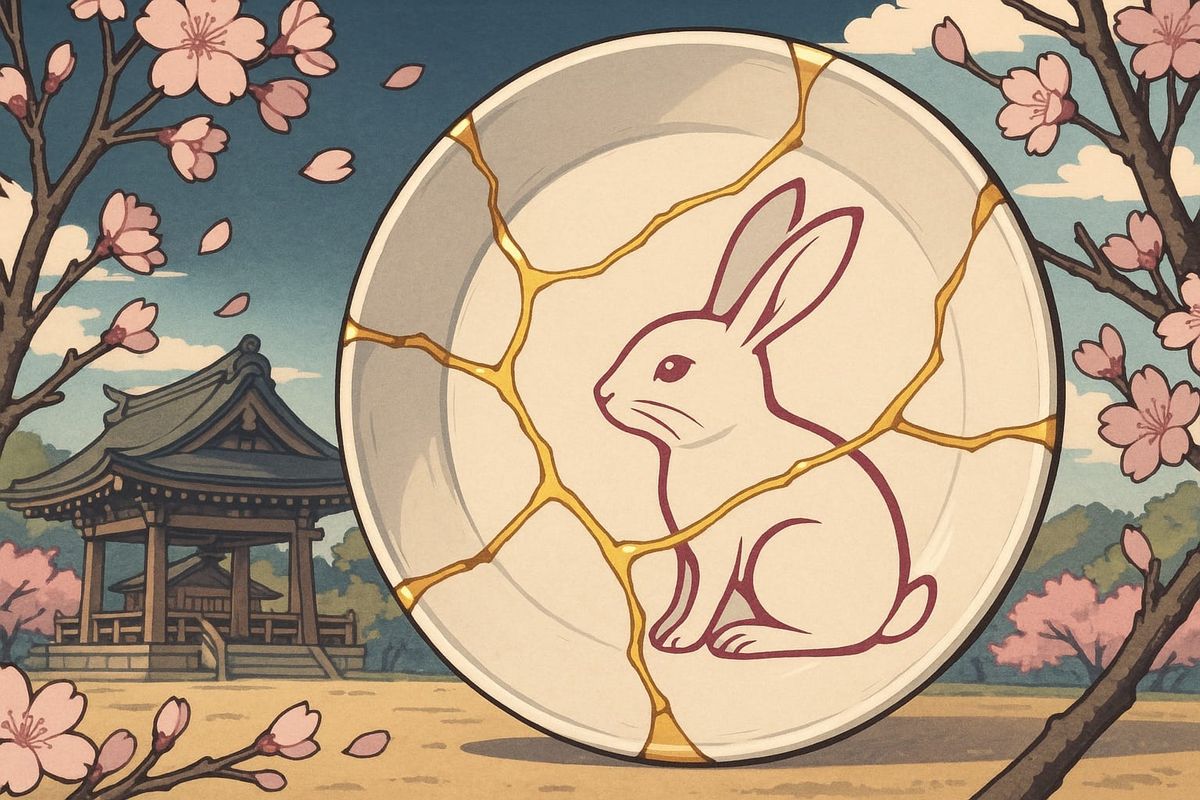
Wabi-sabi aesthetics. Visible repair. Beauty in imperfection. Kintsugi gold seams. Cultural acceptance of limitations.
It's elegant. It's proven. And it's probably not our future. Because it arose from constraint we don't have and wouldn't choose. We could recreate these conditions artificially — advocate for degrowth, celebrate scarcity (or vote for autarky). But that abandons the performance economy vision entirely.
Option 2: Technocratic Circular Economy (Efficiency Without Emotion)
This is where most corporate sustainability initiatives are heading. Optimize material flows. Implement take-back programs. Design for disassembly. Create reverse logistics networks.
It's rational. It's measurable. And it's emotionally flat. Products designed for efficient recycling but not for love. Services optimized for resource recovery but not for delight. Repair programs that reduce waste but feel like hassle.
This is circular economy as obligation. As compliance. You get all the business model logic without any of the cultural infrastructure that makes it sustainable.
It's Lean 2.0 techniques without the philosophical foundation. Companies that tried to copy Toyota's tools without understanding the cultural foundation (e.g., reverence for mastery) found Lean a hard slog indeed.
Option 3: The Joyful Synthesis (Something We Haven't Imagined Yet)
A circular economy powered by abundance and imagination rather than constraint and necessity. Where reverence for materials comes from joy in their excellence rather than fear of their scarcity. Where circular transformation itself is more beautiful than linear extraction ever was.
Not make-do elegance. Not emotionless efficiency. Unprecedented delight.
We don't know exactly what this looks like yet. Because we haven't built it yet. And discovering how to make it means using joy as our compass.
Why Joy Isn't Optional
Submitted for your consideration: The more durable the product, the greater the opportunity cost of joylessness.
In a linear economy with planned obsolescence, if a product is boring, that's annoying but temporary. You'll replace it soon anyway. But in a circular economy with products designed for decades of use? If you create something durable but joyless, you've trapped your customers in a long-term relationship with something they don't love.
Kondo asks what she considers most mottainai — most wasteful. Not "things that get thrown away." But:
"Things that never spark joy, things that make us feel ambivalent or uneasy, lying dormant in our homes forever. Things that are never used because we fear they will change or break."
The expensive dress saved for a special occasion that never comes. The pristine appliance too nice to risk breaking. The guilt-purchased sustainable product you don't actually enjoy using. Resource extraction that never even delivered value.
If brands don't build joy into their circular solutions, who will? Customers cannot be expected to develop emotional attachment to products designed only for efficiency. You can't build a culture of maintenance around things people tolerate rather than love.
This is the test: Would someone be genuinely sad if this product stopped working after ten years? Would they invest their own time and money to repair it? If the answer is no, you haven't built a circular product. You've built a durable burden.
Joy as the Discovery Method
Kondo gave us a practical method for discovering what right relationship with materials feels like, without requiring constraint to force it. When she asks "does this spark joy?" she's asking you to reconnect with the animist understanding that things want to be of use to you — that there's dignity in that relationship when it works, and sadness when it doesn't.
Her reflection on kintsugi reveals the principle:
"Restoring something to its original form is not the point of kintsugi. It is the pursuit of beauty in the process of repairing that truly matters."
Kintsugi isn't about returning to what was. It's about discovering beauty in transformation itself. The gold seams don’t conceal the break — they consecrate it.
That's the template for the Circular Century.
What's the equivalent for circular economy?
- Products that become more valuable through maintenance and personalization
- Service models that create deeper relationships than ownership
- Repair experiences that feel like collaborative craft
- Materials that age into beauty rather than deteriorate
- Business models where longevity creates delight, not deprivation
We don't know exactly what this looks like yet. And discovering it requires pursuing beauty in the transformation process itself. Using joy as the compass that points toward delight from experiencing objects in a circular way.
The Entry Problem
Then Kondo describes what happens when you develop this skill:
"You shift into a life in which you take care of the things you have and create less waste. Things no longer overwhelm you because you are in better control of what you bring into your life."
Notice the sequence: Identify what you love → Take care of it → Control what enters.
That's the demand signal performance economy requires. And it reveals something most circular economy discourse has missed: we've been focused on the wrong end of the cycle.
We obsess over waste management, recycling rates, end-of-life solutions. But Kondo asks:
"Why are we bringing things in that we won't truly value?"
🔒 What if circularity’s challenge isn’t how things end—but how they begin? Inside: the design logic of entry selectivity.