Leadership in the Time of Enshittification

Last week’s letter argued that circularity’s early economic case rested on an expectation: that rising material scarcity and persistent price volatility would create an unavoidable supply-side pressure for redesign. That expectation was reasonable in the early 2010s. It also proved insufficient. In aggregate, scarcity signals did not compound into a forcing function strong enough to dislodge a fully amortized, highly optimized linear status quo. When that pressure failed to materialize, circularity remained compelling in principle, but optional in practice. And in the absence of a forcing function, systems tend to revert to what they know: optimization, incrementalism, and short-horizon extraction that can be justified quarter by quarter.
- The triumph of managerial logic
- The Iron Triangle
- Mindless optimization is not leadership
- It doesn’t have to be this way
- Provocations
The triumph of managerial logic
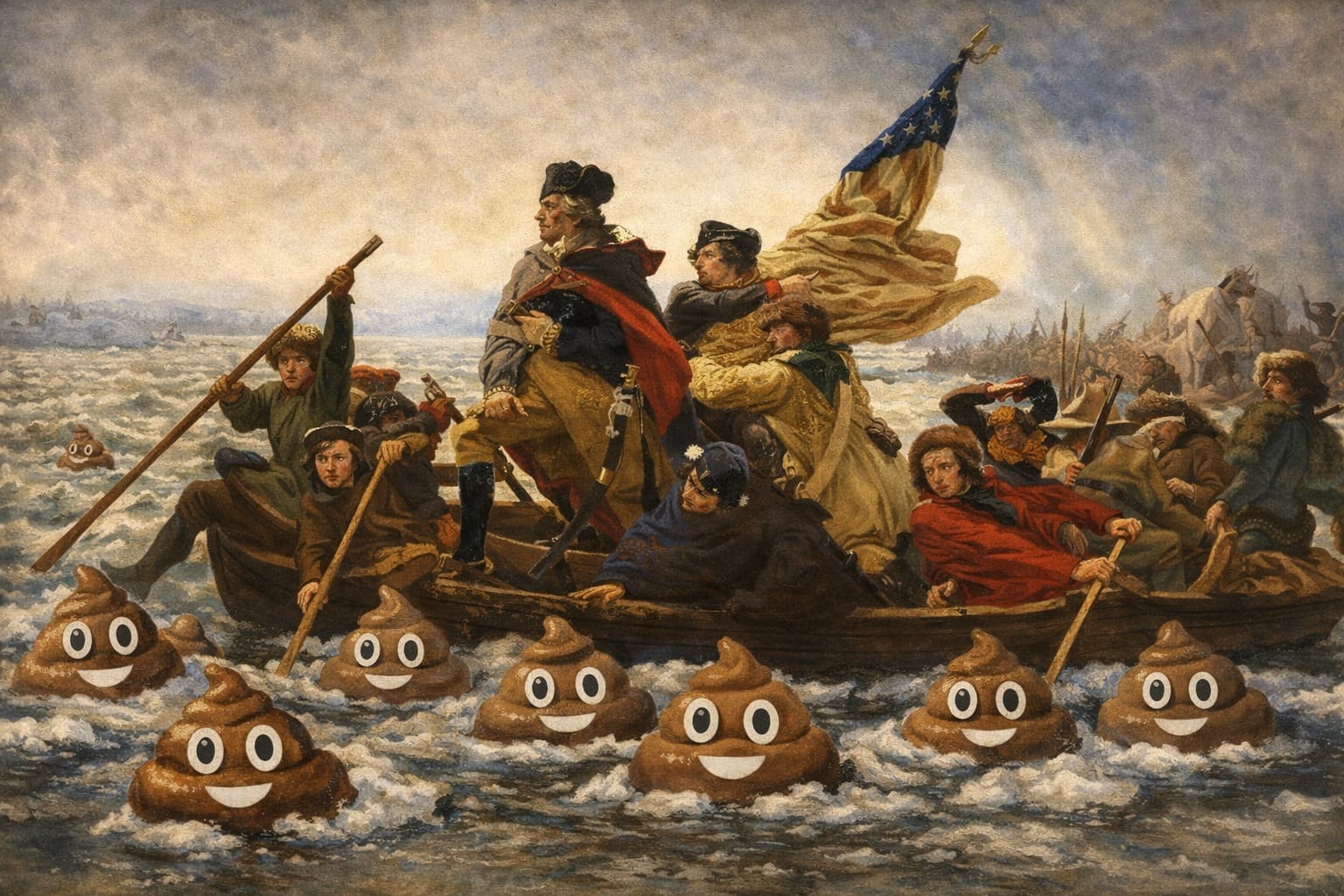
This dynamic of status-quo self-perpetuation is what the linear economy shares with enshittification. Cory Doctorow’s colorful term describes an economic arc that is all too familiar: systems begin by serving users generously, then reallocate value toward business customers, and eventually turn inward — extracting from all sides in an attempt to satisfy capital through optimization alone.
In the short run, this can appear to work. Over time, however, the degradation of the experience undermines the system’s appeal to everyone involved, including capital itself. What looks like value maximization from the inside becomes value destruction in the aggregate.
Because enshittification undermines everyone, it is aptly seen as a systems problem, and therefore a leadership failure.
The root causes of enshittification are not bad actors or a lack of intent. When managerial logic becomes the primary way systems are governed, early gains are almost guaranteed. Metrics improve. Growth accelerates. But optimization without stewardship does not expand value indefinitely; it reallocates it. Over time, systems resolve their internal tensions not through alignment, but through extraction. What looks like decline from the outside is, from the inside, the logical conclusion of success measured too narrowly, for too long.
This same pattern helps explain why circular economy efforts have struggled to move from promise to performance. Circularity set out to reconcile the interests of producers, consumers, and capital by promoting systems in which value could be created and sustained without resorting to the extractive dynamics of linear models. That ambition remains sound. But when alignment across those three constituencies is treated as an optimization problem to be managed rather than a stewardship responsibility to be led, the system defaults to what it knows how to do: prioritize near-term returns, push costs outward, and tolerate degradation as long as the metrics remain defensible.
The Iron Triangle
At the heart of both enshittification and stalled circularity lies the same structural challenge: sustaining alignment between producers, consumers, and capital over time. Each vertex of the triangle has legitimate interests. Producers seek efficiency and stability. Consumers seek affordability, reliability, and fair treatment. Capital seeks predictable, competitive returns. Optimizing for any two, absent stewardship-minded leadership, almost always comes at the expense of the third.
Linear systems resolve this tension in a familiar way. Early on, value is shared broadly: prices are low, experiences are generous, margins are thin but improving. Over time, pressures mount. Optimization intensifies. Costs are pushed outward — to labor, to users, to the environment — while returns are pulled inward. Eventually, the system stabilizes not through alignment, but through extraction. Enshittification is simply the late-stage expression of a system that has run out of ways to hold the triangle together without degrading one of its vertices.
Circular economy thinking emerged as a response to this kind of dynamic, even if it was not always understood in these terms. “Closing the loop” is more than a materials strategy. By its nature, it seeks to align the interests of producers, consumers, and capital. In practice, it functions less like optimization and more like diplomacy: an ongoing effort to reconcile competing interests without collapse.
By preserving value in products, components, and materials, circular systems aim to reduce the need to choose between acceptable prices, viable margins, and externalized harm. In this sense, navigating a viable path to circularity and navigating a viable path through the iron triangle are the same challenge.
Mindless optimization is not leadership
But reconciling the iron triangle cannot be achieved through optimization alone. Metrics can improve while alignment subtly decays. Efficiency gains can mask value shifts that are achieved by externalizing costs rather than preserving alignment. When circularity is pursued as an exercise in optimization, whether through better materials, tighter logistics, or higher recycling rates, it inherits the same failure mode as platforms optimized relentlessly for engagement. In both cases, a locally sensible objective is pushed past the point of judgment, until gains in one dimension quietly produce decay everywhere else.
In the linear value logic that governs most systems today, each vertex of the triangle is caught on a treadmill largely set by the others. Producers are pressured to shorten product lifecycles and extract margin through volume. Consumers are conditioned into patterns of premature replacement and dependence. Capital, responding rationally to both, shortens its planning horizon, favoring liquidity and near-term performance over durability. No single actor chooses this outcome outright. It emerges from the system as it is currently governed.
It doesn’t have to be this way
Circularity offers a way out, but only if it is understood as leadership work rather than a technical fix.
For producers, this means extending the profitability horizon: investing in offerings designed to perform, adapt, and endure rather than churn.
For consumers, it means supporting deeper jobs to be done: reliability over novelty, agency over dependence, continuity over planned obsolescence. Circularity succeeds here not by asking consumers to sacrifice, but by freeing them from cycles that no longer serve them.
Capital, in turn, benefits when these shifts occur together. Systems that preserve value rather than liquidate it restore legibility and control to investment. Risk becomes easier to price when assets last, relationships endure, and demand is earned rather than manipulated. Planning horizons can lengthen. Liquidity no longer depends solely on exit velocity, but on the steady performance of systems built to last.
Stepping off this extractive endgame is not a surrender by any one side of the triangle. It is an alliance. Producers, consumers, and capital move together toward systems that reward long-term stability and growth; systems that make space for imagination to breathe, rather than suffocating it under one-dimensional managerial logic.
That is the promise circularity still holds, and the leadership challenge now squarely in front of us. If leadership is the work of redesigning systems, empathy — understood as sensitivity to what producers, consumers, and capital each genuinely care about — is where that work has to begin, and it will be the focus of the next Letter.
For Dynamo members: a set of provocations that translate this essay into leadership questions about optimization, alignment, and long-term value. Your support helps sustain this work and the thinking behind it.
Subscribe to continue reading