Circularity Summer Camp
The founding texts of circularity — Benyus, McDonough & Braungart, and Stahel — read together. Three merit badges earned, and one still on the table.

We started our summer reading last week at the beginning with Walter Stahel's Circular Economy: A User's Guide. A masterwork of supply-side economic theory, it admittedly falls short of its intended demand-side goal: "to build a ship… you must first make men long for the sea." Still, we had to admire the balanced synthesis of its inputs.
This week we investigate those inputs. Three books: Janine Benyus's Biomimicry, William McDonough and Michael Braungart's Cradle to Cradle, and Stahel's own The Performance Economy. The founding texts of the circularity movement.
 Janine M Benyus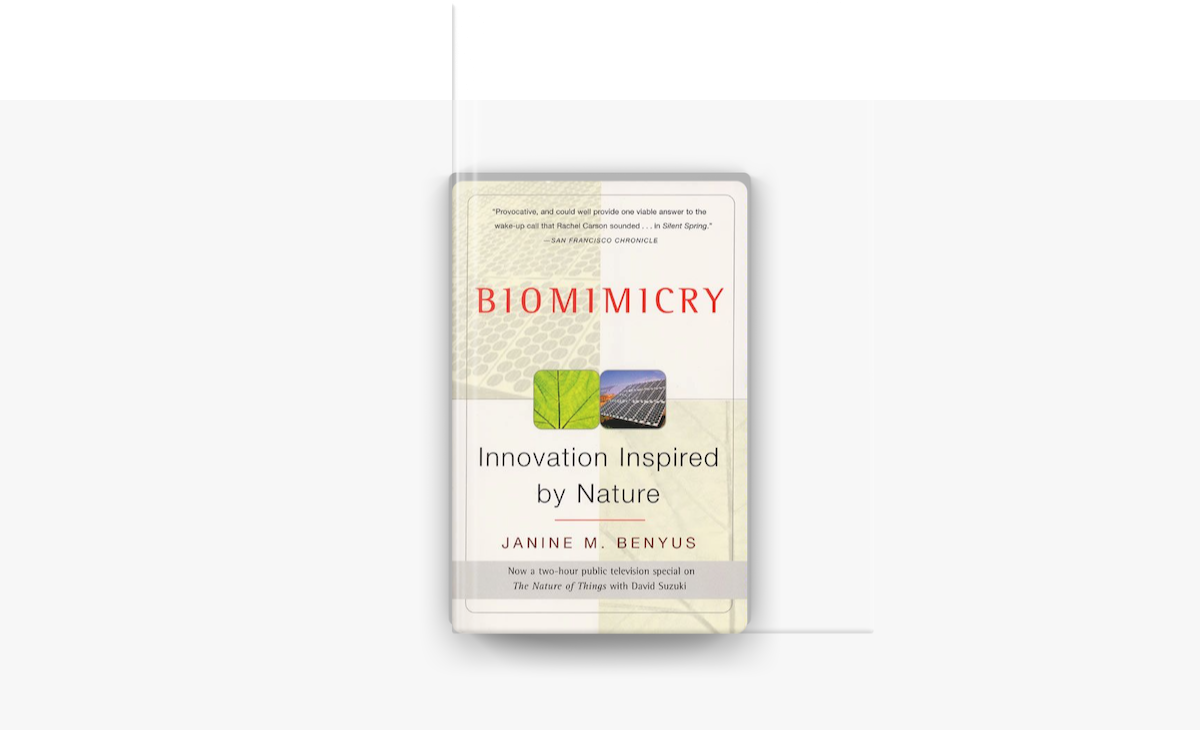
 William McDonough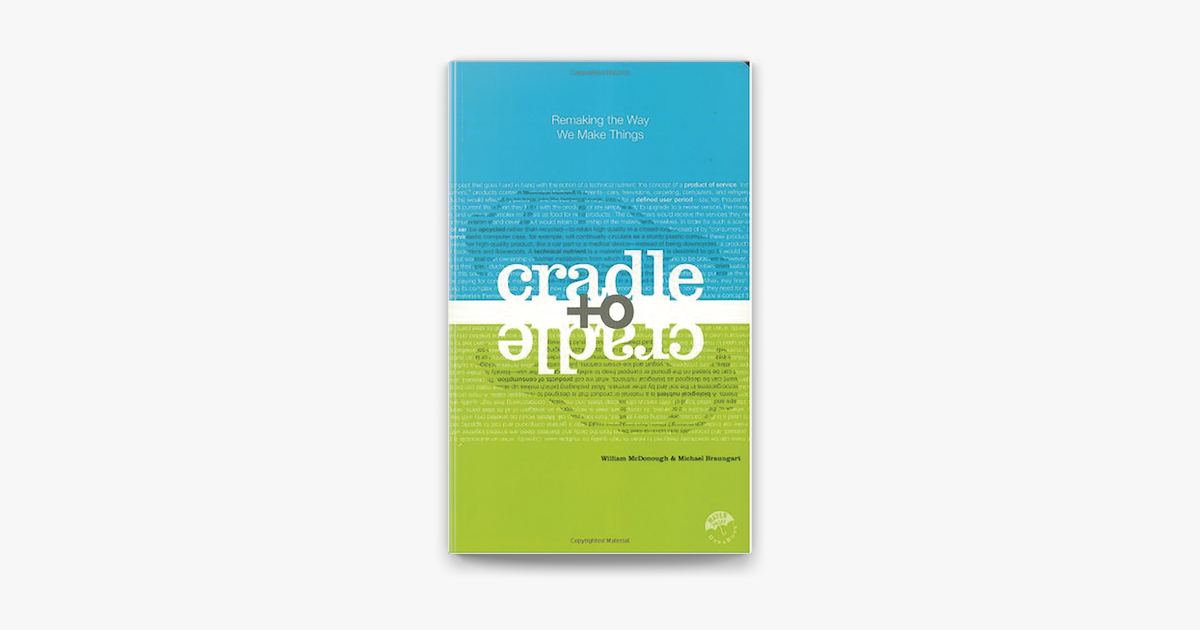
 Walter R. Stahel
These are sophisticated works, and quite wide-ranging. Reading through them, I was entertained by the notion that each offered the chance to earn merit badges, from felling a tree at the beginning to making a canoe in the middle to paddling a race at the end.
Kind of like a summer camp. That is what a beginning can look like. A diverse set of bright kids arriving from different towns, discovering by the end of the first week that they were all into the same thing.
It's a good summer when you both learn how to build the ship… and develop a longing for the sea (er, lake).
Three merit badges
Each book interrogates our moment through a different first principle. Each is necessary, none by itself is sufficient.
Benyus asks about limits. By interrogating living systems, she defines what a mature system does: it runs on sunlight, uses only the energy it needs, banks on diversity, and taps the power of limits rather than fighting them. Nature curbs its excesses from within and by design.
McDonough and Braungart ask about waste. Their question is effectively insolent. What if the category of waste did not exist? Not less waste, but no such thing as waste. If a cherry tree drops its blossoms on the ground by the thousand nobody calls it wasteful. Braungart is a chemist and McDonough is an architect, which gives their book an unusual reach. Their territory spans from the molecule to the blueprint.
Stahel asks about time. If you sell jet engines, you want to shorten the time between sales. If you sell thrust by the hour, you want the engine to fly for thirty years. Same object, opposite incentives. Choose your model, choose your business.
Limits. Waste. Time. Keep those three questions in mind and you can interrogate almost any circular proposal that crosses your desk.
Diagnosis, prognosis, remedy
Taken together, these three volumes move through a familiar sequence.
- Benyus is diagnosis. She tells you what a healthy system looks like and how sick ours is by comparison.
- Stahel is prognosis. He tells you what happens to value over time and what it will cost to ignore time as a factor.
- Cradle to Cradle builds. There is no substitute for imagination in the remedies. Their imaginations run free. They move beyond the what-if scenarios and propose mature product concepts: factories whose effluent leaves cleaner than it arrived. A washing machine you lease preloaded with two thousand loads' worth of internally recycling detergent. A building that makes oxygen, sequesters carbon, distills water, and changes with the seasons, like a tree.
There's a gradient that runs like this: as you move from diagnosis to prognosis to remedy, the emphasis shifts from rigorous application of first principles to rampant application of imagination. It's clear when you take these books in at once that you need both. But you cannot reason your way to a remedy nobody has pictured. Somebody has to picture it.
This is where the User's Guide stops. In conceding the point about inspiring broad desire for a circular future, the book declares its remit. It presents us with a supply-side recipe. We're meant to look elsewhere for visions of remedies.
Slow loops, fast loops
Set The Performance Economy next to Cradle to Cradle and you notice at least one fundamental disparity. There's a good deal of information value in it.
Stahel wants your things to last. Keep the object in service. Repair it, upgrade it, remanufacture it, and the longer it works the better everyone does. Slow the loop.
McDonough & Braungart want the loop to run as fast as you need. Let people have the new thing. Let them desire it, buy it, wear it out, hand it back. Just make sure every molecule comes home, so that the aspiration for the new thing results in no waste. Speed the loop.
Same movement, different velocities. Strong conviction on both sides.
The logic of both arguments is sound. Which one fits our world? Pondering this question was the biggest pause I took in my reading this week. The only reasonable conclusion is that loop speed is a design decision, not a moral one. It follows from what the object is for, and what the business model behind it requires.
A turbine, a building, a machine tool, a bridge: the value is in the service life, and the loop should run slow. Stahel is right about these. A jacket, a phone, a kitchen, a chair: the value refreshes with desire, and the loop should run fast, provided the materials come home. McDonough & Braungart are right about those.
The linear economy's actual sin was never speed, or fashion. It was running one speed for everything, and sending nothing back.
Ragweed and redwood
Benyus's analysis instructs in another way. By looking deep into nature's past, she evokes humanity's future.
Her conceptual framework for the stages of an ecosystem reminded me of the S-shaped curve of the Product Life Cycle. (This may become pertinent in next week's Letter when we cover Donella Meadows.)
An ecosystem starts as what she calls a Type I system, and it behaves the way you would expect from something young. It grabs. It sprawls. It burns through resources, spends everything on growth, and it is very good at colonizing bare ground. Ragweed does this. So has the linear industrial economy.
A mature system, the Type III, does something else. It has been in the same place long enough to understand it. It shops locally, banks on diversity, runs on information, and gets more life out of less material. A redwood forest does this. Anyone who has visited a redwood forest will not mistake it for a diminished version of a ragweed patch.
That is the whole aspiration, and it is not a sacrifice. It is a graduation. There is opportunity in this. The question is whether brands can learn how to sell life as a redwood over life as a weed.
What is the intention?
All three books point to the same star: design.
Benyus says design may be the most powerful lever we have for moving an economy. Stahel's business models are design decisions expressed as actuarial science and time value of money. McDonough & Braungart treat every design as "a declaration of intent."
At this moment, the intent is for accelerated, fundamental system change. It is an act of rebellion, an implicit critique of the forces that brought us to where we are.
A persistent refrain of Cradle to Cradle is that it is not enough to do less bad. That is the essence of today's approach to sustainability, and the authors dismiss its half-measures — the social market economy, business for social responsibility, natural capitalism — as "uneasy alliances, not true unions of purpose."
The next move lies upstream of materials and upstream of business models. It is in what we intend a thing to be, before anyone makes it. That is where loop speed is decided. That is where waste is invented or abolished. That is where the longing either gets built in or gets left out.
The writers of these three books had to reason from first principles, because there was no playbook. Ingenious pioneers, they had to reason with what they had, and apply wisdom and intention and purpose. They earned every badge the camp had to give. They felled the trees, built the boats, and taught us how to paddle.
The last badge — call it longing for the sea, or "true unions of purpose" — is still on the table.
That is still the job.
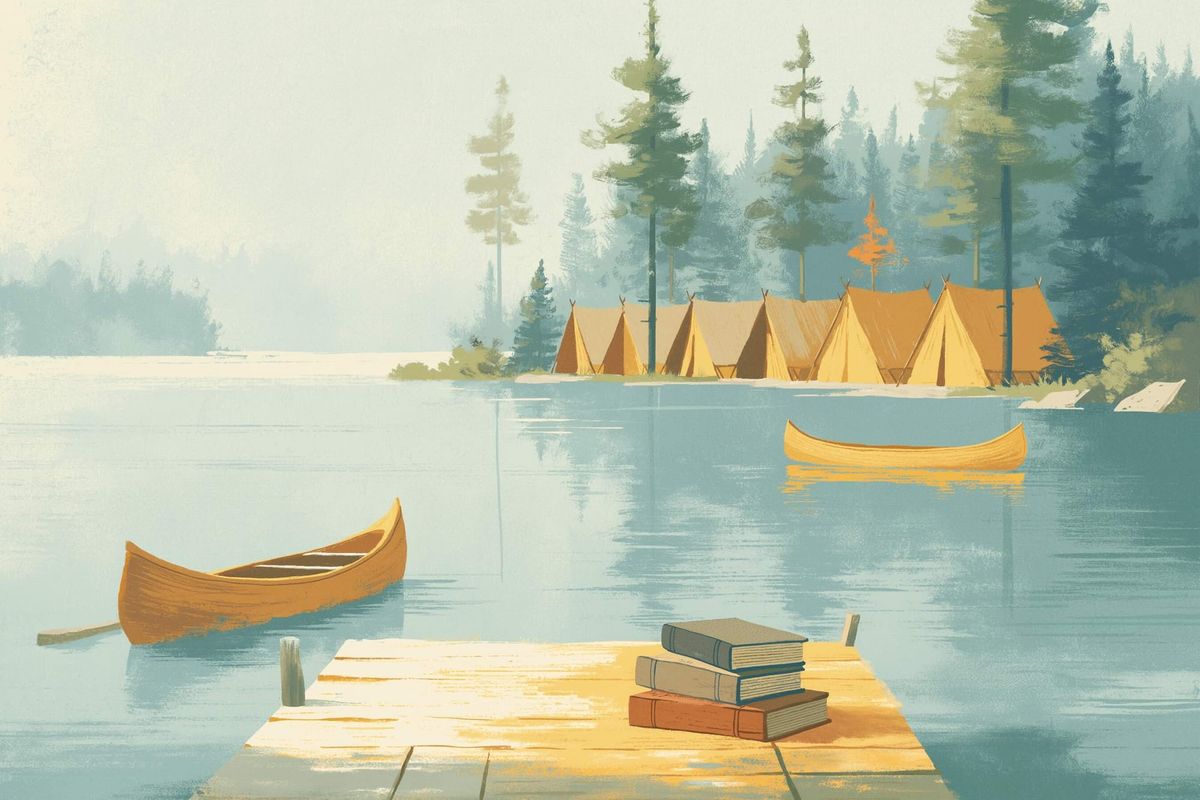
Image prompt: First-person point of view from a wooden dock at a retro summer camp, looking across a still lake, a single canoe drawn up on the near shore and another canoe out on the calm water, a neat row of canvas A-frame tents pitched among pine trees along the shoreline, three closed hardcover books stacked on the sun-warmed planks in the near foreground, distant wooded hills, bright calm summer morning, mid-century travel-poster illustration style, 1960s World's Fair poster aesthetic, symmetrical whimsical composition, bold confident graphic design, flat color areas with clean edges, warm optimistic palette, citrine yellow (#FEC400) canvas tents and citrine yellow canoes, teal (#00B7B0) lake water and sky, deep space navy (#1B2951) pines and depth, a small coral red (#F14432) spot accent, pearl gray negative space, gouache and screenprint texture, nostalgic, orderly and inviting, no people, no text