More Joy, Less Work

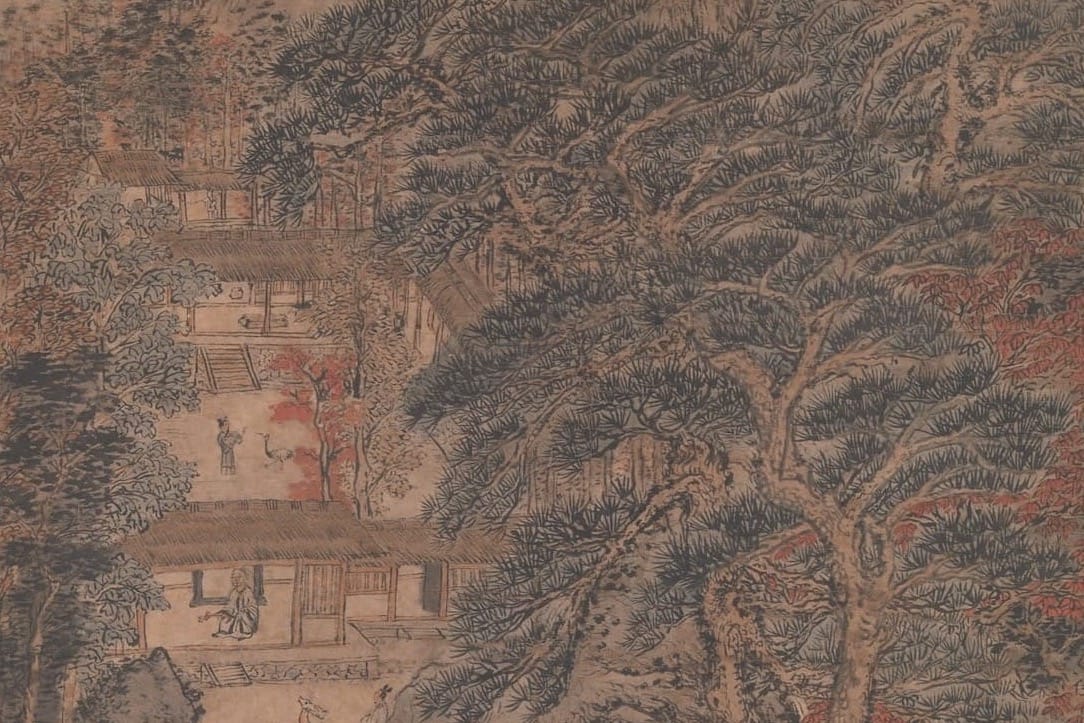
What you crave tells you what you lack.
The courts of Versailles craved splendor. Their lives were cold, violent, and short. Splendor was the fantasy, the escape, the thing that couldn't be had cheaply. So they gilded everything.
Midcentury American men craved rugged independence. They were accountants and middle managers and insurance adjusters from the suburbs. So they watched John Wayne westerns on Saturday nights and felt, for two hours, like men who answered to no one.
We crave simplicity.
Why? Because we are drowning. The noise has become absurd. The feed refreshes and the options multiply and the inbox fills and the subscription renews and the notification pings and the algorithm suggests and somewhere underneath all of it is a person who just wanted to read a book tonight.
There is a market signal here. A big one. And most brands are ignoring it.
The Counterculture Already Knows
Last week I described an emergent counterculture that doesn't look like the last one. Today’s punks are repairing their dishwasher. Growing food. Choosing quality over quantity. Opting out of systems that treat them as inputs.
This week, we name the rebellion’s objective.
They want enough.
That word does more work than it appears to. "Enough" is not "less." It is the precise amount that satisfies without burdening. A well-made meal for four people. A home that fits. A tool that lasts. Enough is what you arrive at when you subtract everything that exists to serve someone else's business model instead of your life.
The rebellion has an advantage: "enough" is closer at hand than at any point in human history.
And the need for it is more urgent than ever.
Two Arcs, One Moment
The first arc: abundance is arriving.
This is the new abundance — not more stuff, more options, or more noise. Instead, a structural shift.
Energy is becoming a technology rather than a resource. Bill McKibben reports that a gigawatt of solar capacity — roughly one coal plant's worth — is now installed every fifteen hours. In Pakistan, ninety-five percent of farmland in some regions has switched to solar, and a set of photovoltaic panels is now routinely included in a bride's dowry. The fuel cost, the biggest line item in a farmer's budget, is simply gone.
Intelligence is following the same curve. It will become infrastructure, the way electricity did — invisible, ambient, available.
Bill Nussey frames it like this: abundance happens when you convert a resource into a technology. That conversion is happening to energy right now, and to intelligence right behind it.
The second arc: the culture of intentional constraint is ascendant.
People are building replicas of Thoreau's cabin across America. Swiss communities are designing 2,000-watt neighborhoods where people work less, share more, and report higher satisfaction. In Los Angeles, the 50L Home coalition retrofitted thirty-one households with water-efficient fixtures and appliances. Nobody was asked to take shorter showers. Nobody changed their routine. Water and energy use dropped dramatically.
Satisfaction went up. Some participants said they now take pleasure in chores they used to resent. In the 2,000-watt neighborhoods, the curated sharing of resources deepened civic participation and turned neighbors into friends.
Most observers see these two arcs as contradictory. Abundance on one side. Constraint on the other.
They are not contradictory. They are complementary. But their intersection benefits from creative management.
The Treadmill Has Reached the Point of Absurdity
Here is what stands between those two arcs and their natural convergence: the hedonic treadmill.
You know the treadmill. You get the raise. You feel good for a little while. Then the new baseline sets in and you need the next raise. You buy the bigger house. It feels spacious for a little while. Then it feels normal and you need the renovation. The psychologists have documented this phenomenon for decades. Satisfaction from acquisition is temporary. The desire for more is permanent.
The industrial economy didn't just tolerate the treadmill. It required it. Planned obsolescence was the fuel for the process. And the bait.
The factory needed output. Managers couldn't measure quality from across the floor, but they could spot idleness. So activity became the proxy for productivity, and then the proxy for virtue, and then the proxy for a life well lived. You can't see flourishing with your eyes, but you can see busyness. We optimized for the thing we could see and called it success.
That error is now playing out at civilizational scale. We measure GDP — output — because it's easier to measure than joy. And then we mistake the metric for the goal.
The treadmill was always a bad deal. But it was an understandable one when material scarcity was acute. Today the treadmill has reached the point of self-parody. Algorithmic feeds sell you solutions to problems the previous algorithm created. Subscription tiers multiply to capture every marginal dollar of willingness to pay.
The McMansion stands as the architectural expression of the treadmill: more square footage, more complexity, more cost, less taste, less coherence, less peace. It is everything that Thoreau's cabin was not.
And here is the thing about Thoreau's cabin, or Chōmei's ten-foot hut: they are implicitly tasteful in the way that things built with clear purpose are. The absence of excess is the design. A McMansion has no such clarity. It is a style of building that doesn't know what it's for, expressed in architectural language it doesn't understand. The treadmill built it, and the treadmill is the only reason anyone would live in it.
The Jevons Trap
Jevons paradox is the most reliable pattern in resource economics: when you make something more efficient, people use more of it. Coal. Bandwidth. Attention. The rebound effect has held for a hundred and sixty years.
Clay Christensen put it like this: we husband what’s scarce, and squander what’s plentiful.
If energy becomes essentially free through renewables, and intelligence becomes essentially free through AI, Jevons predicts we will squander both. More energy means more consumption. More intelligence means more optimization of extraction. The abundance that could liberate us from the treadmill could just as easily accelerate it.
In other words: McMansions of energy and intelligence.
The simplicity advocates can't solve this alone. Thoreau went to the woods by himself. The monks formed communities of the deeply committed. The Swiss 2,000-watt neighborhoods require an infrastructure of civic consensus that doesn't travel. Individual willpower doesn't scale.
Human nature never changes. Right?
Jevons paradox is just that: a paradox, not a law.
We have broken supposedly immutable links before. The most powerful human drive met the most elaborate governance system in history — thousands of years of religious, legal, and cultural architecture, all built on the assumption that the consequences of sex were inseparable from the act. And then a small pharmaceutical advance decoupled them in a generation. Nobody's nature changed. The system changed, and behavior followed. All at once.
Incipient advances in energy and intelligence will decouple the link between efficiency and excess the same way. And circularity will enable the business models that thrive in that new set of circumstances.
When materials cycle instead of deplete, when energy regenerates instead of exhausts, the drive for more doesn't produce the consequence of less.
You don't change human nature. You design a system where that nature stops causing damage.
But technology alone is not enough. It needs fashioning into a compelling solution. Design, marketing, packaging, and organization all need to fit the new purpose. That’s what Steve Jobs did for computing.
As Lee Clow, Steve Jobs’ advertising partner, understood: everything a brand does is media. The technology of circularity needs to be brought to life for people — or it remains an abstraction.
The Privilege We Won't Take
We accept longer, healthier lives as a gift.
No one argues that modern medicine is an affront to the character-building virtues of dying young. No one insists that antibiotics make us soft. The compounding advances in healthcare are a privilege of living in this era, and we receive them gratefully.
So why do we treat the hedonic treadmill as though stepping off it were a moral failure? Why do we treat overwork as dedication, overconsumption as ambition, and burnout as the price of seriousness?
Industrial-era programming. Nothing more.
Chōmei arrived at his ten-foot hut through years of philosophical reflection — after loss, after failure, after the long work of understanding what actually mattered to him. Thoreau went to Walden with the intellectual preparation of the entire Transcendentalist movement behind him. The path to the insight was hard. But the destination they found — a life of intentional sufficiency, rich in beauty and quiet and thought — was materially modest even by the standards of their own centuries.
Today, the path of philosophy is harder than ever. Information overload makes sustained self-examination feel impossible. The noise floor has risen so high that the Socratic conversation — the one that helps you discover what you actually want — can barely be heard.
But the destination Chōmei and Thoreau reached? That has never been easier to build.
Imagine the ten-foot hut with photovoltaic panels and a heat pump. Imagine Walden with an induction cooktop and an e-bike. Imagine the monk's cell with a view of the stars and a complete library of every civilization's accumulated knowledge, accessible from a device that fits in your hand.
The material infrastructure for the intentional life is better, cheaper, and more available than at any point in history. The cost of stepping off the treadmill has never been lower. The cost of staying on has never been higher.
Constraint is the price of joy. It always has been. But that tradeoff has never been more favorable.
Provisions for the Journey
The philosophical path to the intentional life is harder. The material path is easier. The desire is there — the counterculture of repair and restraint and quality is already growing. And the coming abundance of energy and intelligence could fund the transition beautifully, if it's directed toward making the simple life better rather than making the complex life more.
But the object of this desire doesn't sell itself. The greatest upgrade in history — more joy, less work, more beauty, less noise — has no sales force. The entire commercial apparatus is optimized to keep people on the treadmill. Every ad, every feed, every notification exists to sell more. Stepping off is anti-revenue by every conventional measure.
Except one.
Circular business models are the only economics where "buy less" is a growth strategy. When your revenue comes from ongoing service rather than unit sales, you want fewer, more durable products in the field. When your design targets satisfaction rather than replacement, you want customers to stop shopping. When your materials cycle rather than deplete, selling less means wasting less means earning more per unit of matter.
This is the mediating institution between abundant resources and constrained living. Not government — governments have been captured, and they move too slowly. Not individuals alone — the philosophical path is too hard without support, and willpower doesn't scale:
Brands.
Brands that build the provisions for people who have already chosen the path — or who would choose it if someone made it accessible. Brands that embed the restraint into the product so the customer doesn't have to exercise willpower. The 50L Home participants didn't decide to use less water. The engineering decided for them, and they were happier.
Fewer things. More durable. More beautiful. Serving needs higher on the pyramid of human aspiration. Earning more by making less. This is not austerity. It is the most sophisticated form of value creation available.
The ascending counterculture — the quiet punks of repair and intention and enough — already know what they want. They are the new Chōmei. The new Thoreau. They need provisions.
The brand that provides them will own the largest commercial opportunity in history. Not because it's easy. Because it's hard, and the difficulty is the moat.
On the Bubble is a Circudyne Letter series taking stock of the macro transition to circularity. Subscribe to follow the full series.
Subscribe to continue reading