
On the Bubble
Transformative Ends, Incremental Means?
The era of incremental change is rapidly coming to a close

Strategic domain of Circudynamics focused on competitive advantage through circular transformation. Uses 'What Would Have To Be True' methodology to reverse-engineer viable pathways from linear to circular business models. Emphasizes economic viability over compliance, positioning circular strategies as systematic competitive advantage like Lean Manufacturing in the 1980s-1990s.

On the Bubble
The era of incremental change is rapidly coming to a close
Maintenance
Why your strategy's relationship with "stuff" determines its limits

Diplomacy
Managing within a system in decline is a form of denial.
On the Bubble
It enables worldbuilding where time and value are not yet fixed, providing a path to product–market fit before markets, metrics, or demand signals exist.
On the Bubble
Why do rigidly managed systems so often end in decay? A closer look at enshittification, linear logic, and why this moment calls for leadership.

On the Bubble
Circularity was built for a moment of expected scarcity. What happens when that pressure never fully arrives — and what must change as a result?

Connection
Stories begin with choices. Without internal coherence, even the best storytelling can’t help us imagine, or choose, the future we need.
Cultural Mythology
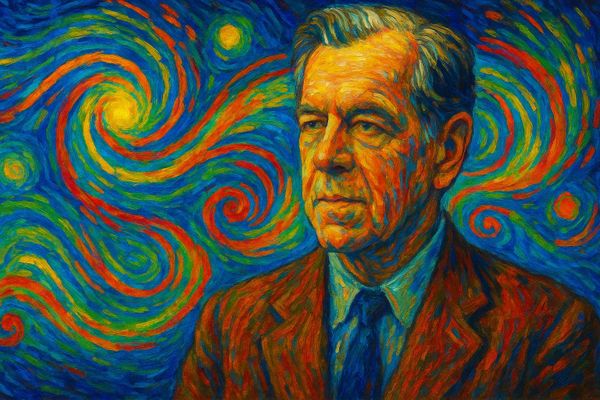
When the world changes faster than our stories, organizations lose coherence and momentum. This Letter shows how Joseph Campbell, George Lucas, and Coca-Cola demonstrated the deeper work of cultural renewal — and what it means to become fit for purpose in the Circular Century.

Imagination
Scientific management made imagination possible. Then it made imagination impossible.

Self-Disruption
What practitioners miss about Christensen's self-disruption theory—and why it matters for scaling circular innovation

Jobs To Be Done (JTBD)
Clay Christensen showed us how to understand consumer preference beyond the A|B test. That key unlocks product-market fit for the Circular Century.

What Would Have To Be True (WWHTBT)
You cannot A|B test your way to system change. Why circular transformation requires asking 'What Would Have to Be True?' instead of 'How Might We?'